When participation changes the curve
Why doing more matters more than seeing more, and what the evidence tells us about immersive brands.
For years, advertising agencies, consultancies, and studios like ours have been telling brands that experiences matter. And we've certainly been busy proving how spectacular we can make them. We've built crazy beautiful environments, wrapped entire buildings in projections, created virtual worlds, filled rooms with sensors, and invented enough variations of the word immersive to keep a marketing conference running for three consecutive days. Four if someone asks whether we can make the whole thing AI-powered. Of course we can. Why is another question.
We've also become very good at measuring everything around an experience: attendance, dwell time, impressions, social shares, media coverage, and the occasional photograph of someone looking genuinely amazed. All useful, but there's a question I've been asking myself for years: does any of this actually make people prefer a brand? Not just remember a beautiful installation or post something about it, but genuinely change how they feel about the brand behind it?
I've always believed immersive experiences can build stronger connections between people and brands, but believing something and having evidence to back it up aren't quite the same thing.
Luckily, Ken Faro, President of Inkblot Analytics, had an opening to explore some research questions and was kind enough to let me bring a few of mine to the table.
The result was the Experience Lift Study, conducted in October 2026 with 1,000 US adults, including 310 who had attended a brand event in the previous year. And one finding in particular caught my attention: more immersion didn't necessarily come with proportionally greater brand impact.
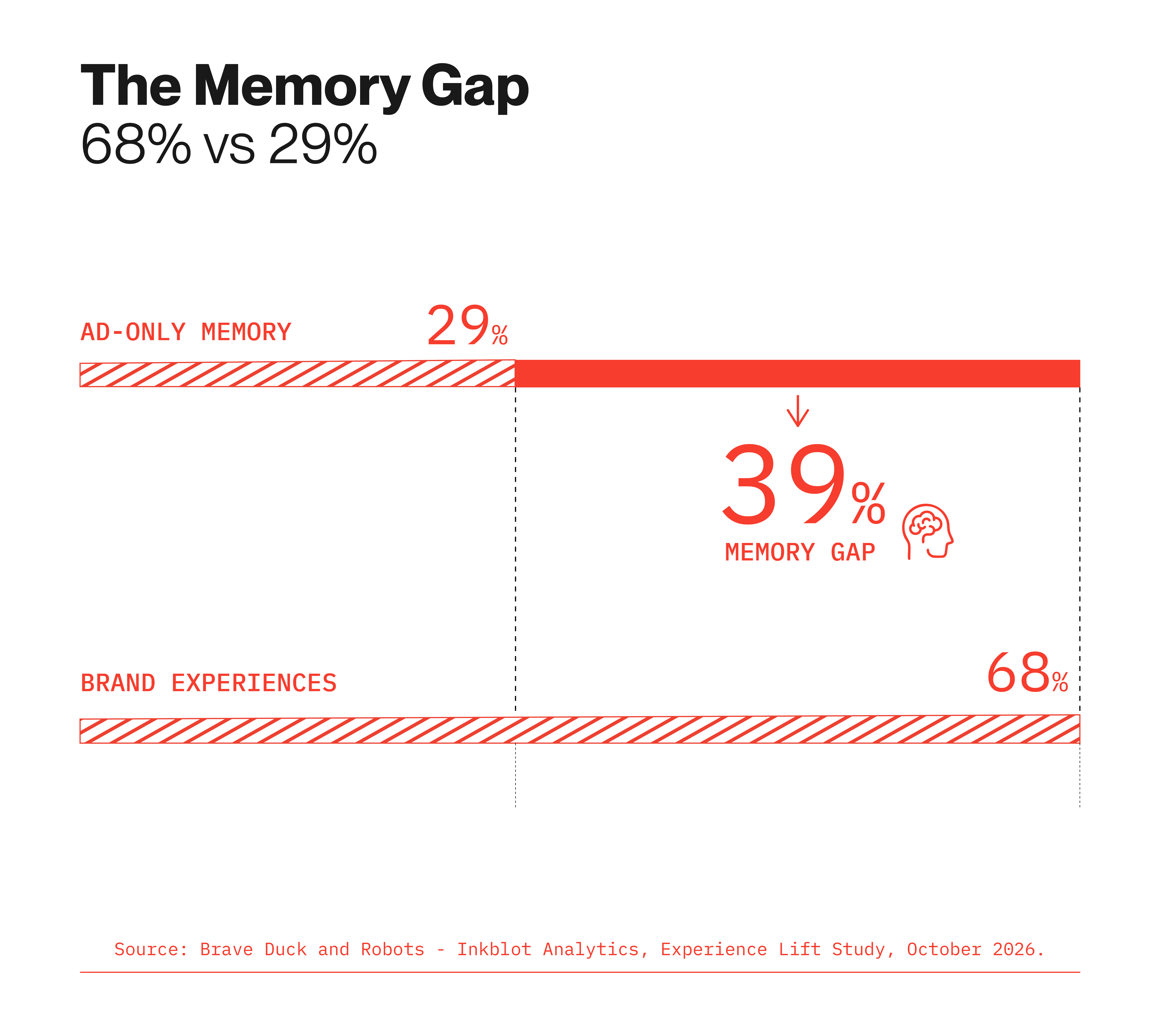
The study found that brand recall associated with experiences was 68%, compared with 29% in the ad-only comparison. That's a 39-percentage-point difference, or more than twice the reported recall. For an industry that has spent years explaining its value through engagement metrics, emotional anecdotes, and beautifully produced case-study videos, that's an interesting place to start.
Any CMO knows that being remembered is one of the conditions for being considered when someone eventually makes a purchasing decision. It doesn't guarantee a sale, of course, but being forgotten isn't exactly helpful either.An advertisement delivers a message, sometimes brilliantly. An experience can make that message something people actually do, feel, and remember. But there's a catch: remembering an experience and remembering the brand behind it are two very different achievements.
I've been around advertising and marketing long enough to see how easy it is to get the first part right and the second spectacularly wrong. People remember the room, the music, the lighting, what they ate, and occasionally even the name of the person who made the cocktails. Not me, obviously. I'm lucky if I remember what I drank.
The sponsor? Give me a minute.
Think about some of the spectacular installations we've seen at festivals over the years. People queue for hours, take hundreds of photographs, and tell everyone they absolutely must see them. But ask those same people a week later which brand was responsible, and I suspect some marketing departments would prefer not to run that particular experiment. Sometimes the experience becomes the attraction, while the brand ends up looking like the production credits at the end of a film. Technically there, but not necessarily what anyone remembers.
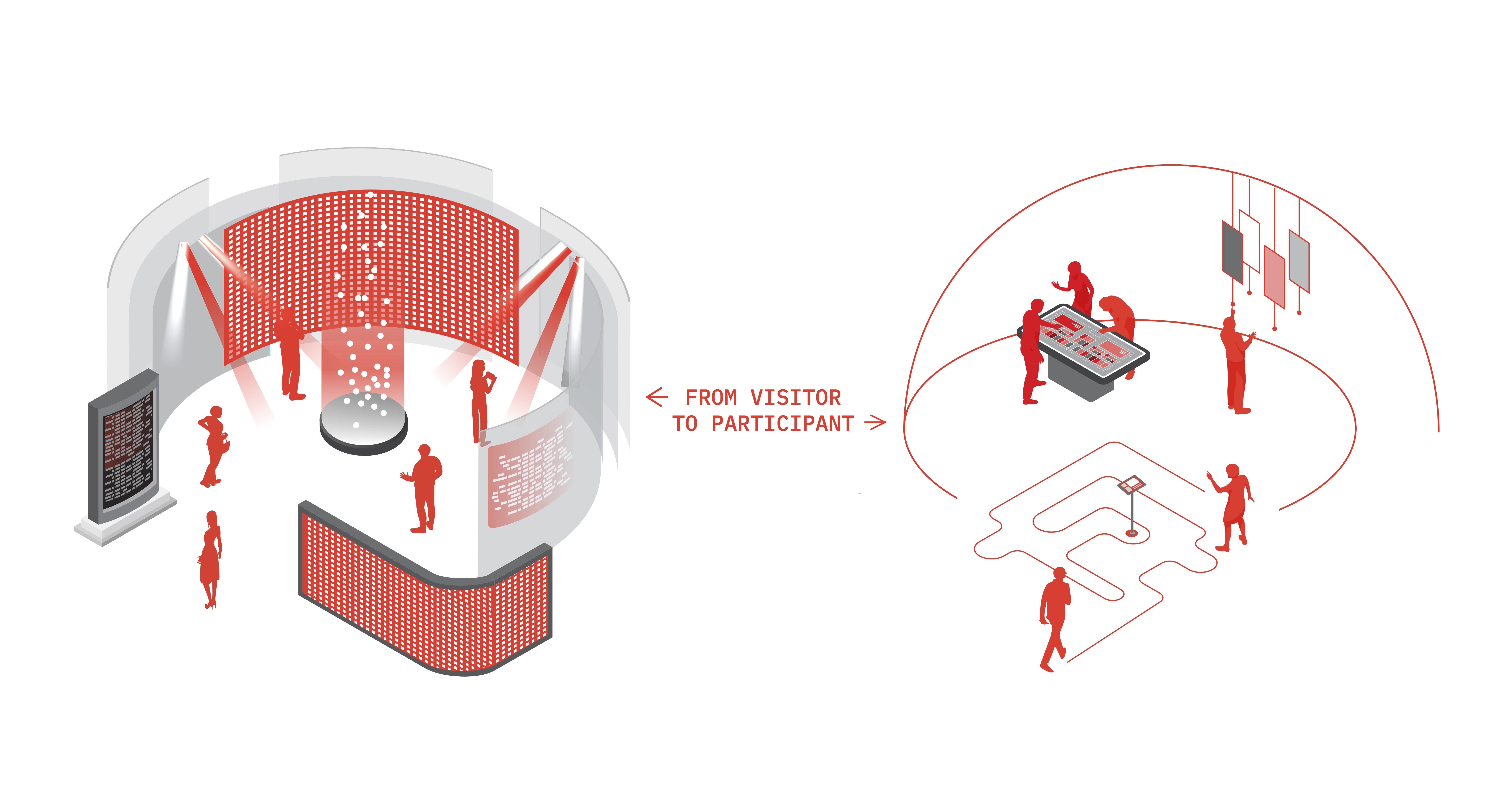
The most interesting part of Ken's research, for me, is the relationship between involvement and brand preference. As people moved from watching demonstrations to sampling products and taking part in activities, reported brand preference increased. Those who took part in an activity showed a 17-percentage-point lift, compared with 19 for fully immersive experiences. Just two points between the two, which I found rather interesting.
I'm certainly not suggesting full immersion is pointless. That would be a rather unexpected career change, and I genuinely love what our industry can create. But we've all seen immersive projects become considerably more elaborate (and expensive) between the first creative conversation and the final production estimate. And while the study doesn't tell us whether simpler, more participatory experiences deliver better ROI, it does make me wonder whether we should spend less time asking how much technology we can fit into a space and more time thinking about what people will actually do there.
For all the talk about engagement and participation in our industry, I was also surprised to see that only 26% of the brand experiences reported in the study actually gave people an active role. Participation has always been central to how we think at Brave Duck & Robots, but apparently getting people through the door and giving them something meaningful to do are still two very different things.
Part of the problem is that we've become too generous with our definition of interactivity. Pressing a button, waving your hands in front of a sensor, or watching your face appear on a giant screen can all be interactive. But interaction and agency aren't the same thing. One gives you a reaction; the other gives you a role.
I've written before about how we've stretched the meaning of immersive until almost anything with enough screens can qualify. Imagine an automotive brand creating an immersive journey through the future of mobility. You could have visitors watching a spectacular futuristic city unfold around them, or let them make decisions that actually change what happens in that city, using exactly the same technology. Both could be impressive, but I'd argue the second gives people something more personal to take away. And participation doesn't mean forcing everyone to get involved. Some people jump straight in, others prefer to watch, and a good experience should make room for both. After all, giving people agency also means letting them decide how they want to participate.
Another number I found interesting is that experiences attended six or more months earlier still showed a 31-point memory lift. By then, the event is long gone, the equipment returned, the invoices hopefully paid, and everyone has moved on to the next project, but something clearly seems to stick.
The study didn't follow the same people over time, so we can't say exactly how those memories evolved, but with 74% also reporting that they talked about or shared their experience afterward, it makes you wonder how much of an experience's value actually happens after people have left.
I've always found our obsession with social sharing a little funny. We design elaborate photo opportunities, encourage people to post, count the impressions, and celebrate when the numbers look good. But what about the conversations nobody asked people to have? What do they tell a friend over dinner, or a colleague at work? And does the brand make it into that story?
We don't know whether those conversations influence purchasing decisions, but I'd argue that giving someone a story they genuinely want to tell is a more interesting ambition than persuading them to upload another branded selfie.
Now, before we get too carried away, let's be clear about what the study does and doesn't tell us. The results are self reported, and because the study wasn't a controlled experiment, we can't say the experiences themselves caused the changes in brand preference. Some participants may have liked those brands already, and we all know that saying you prefer something and actually buying it are two different things, especially when price and convenience get involved. This is where Ken's perspective has been particularly valuable. I came into this with my own convictions, but the last thing I wanted was research designed to tell me I was right.
We still don't know which experiences deliver the best return on investment, whether these findings translate into actual purchasing behavior, or how the results might differ across cultures, audiences, and brand categories. That's what I'd love to explore next, ideally with proper control groups and Ken's help. In the meantime, the research does give us a useful reminder about how we approach our work. Too often we decide we need a pop-up, an immersive showroom, a virtual world, or some elaborate new technology, and only then start figuring out what people are supposed to do inside it.
Surely it should be the other way around. What do we want people to feel, understand, or remember about the brand? What could they do that might make that happen? Once we have those answers, we can figure out what technology, environment, or storytelling approach makes sense.
And I'm not suggesting we should make experiences smaller or less ambitious. I love spectacular productions, but complexity needs a reason to exist, participation should mean more than pressing a button, and ideally people should remember the brand that made the whole thing possible.
Alla prossima.