Levels of social interactions
I am a notorious introvert. I spend a lot of time on my own.
Not in a dramatic way, just quietly. Reading, cycling, getting lost in something without having to explain it to anyone else. It’s efficient. I don’t have to negotiate, I don’t have to align expectations. I can start and stop whenever I like. And most of the world is now designed for that kind of time. Everything is available instantly, individually, and on demand.
But there is another kind of time that behaves very differently. The time you spend with other people, a dinner that stretches longer than planned, a conversation that goes somewhere unexpected, a moment when nobody reaches for their phone because, for once, something better is happening right in front of them.
That time is not efficient. It requires coordination, compromise, and intent. And precisely because of that, it has become incredibly valuable.
For years, we have optimised for attention.We built entire systems around impressions, views, clicks, and time on screen, convincing ourselves that occupying small fragments of focus was the same as being experienced. And we became very good at it.
But most of those fragments were half seen, or ignored entirely. Now people are becoming more selective about how they spend time together. Not all social time, not everything, but certain moments are planned more carefully and remembered more clearly.These are the moments where meaning accumulates.
The assumption is that more social interaction automatically means more value. That if people are spending time together, something meaningful must be happening.
But that’s not quite how it works.Some social time is structured and predictable. Work meetings, routine interactions, obligations we move through without thinking too much about them. Necessary, sometimes even enjoyable, but rarely memorable. Some of it is maintenance. Catching up, checking in, staying connected. Important, but light. It keeps relationships alive without necessarily deepening them.
And then there is a different category entirely.The kind of time people actively choose.
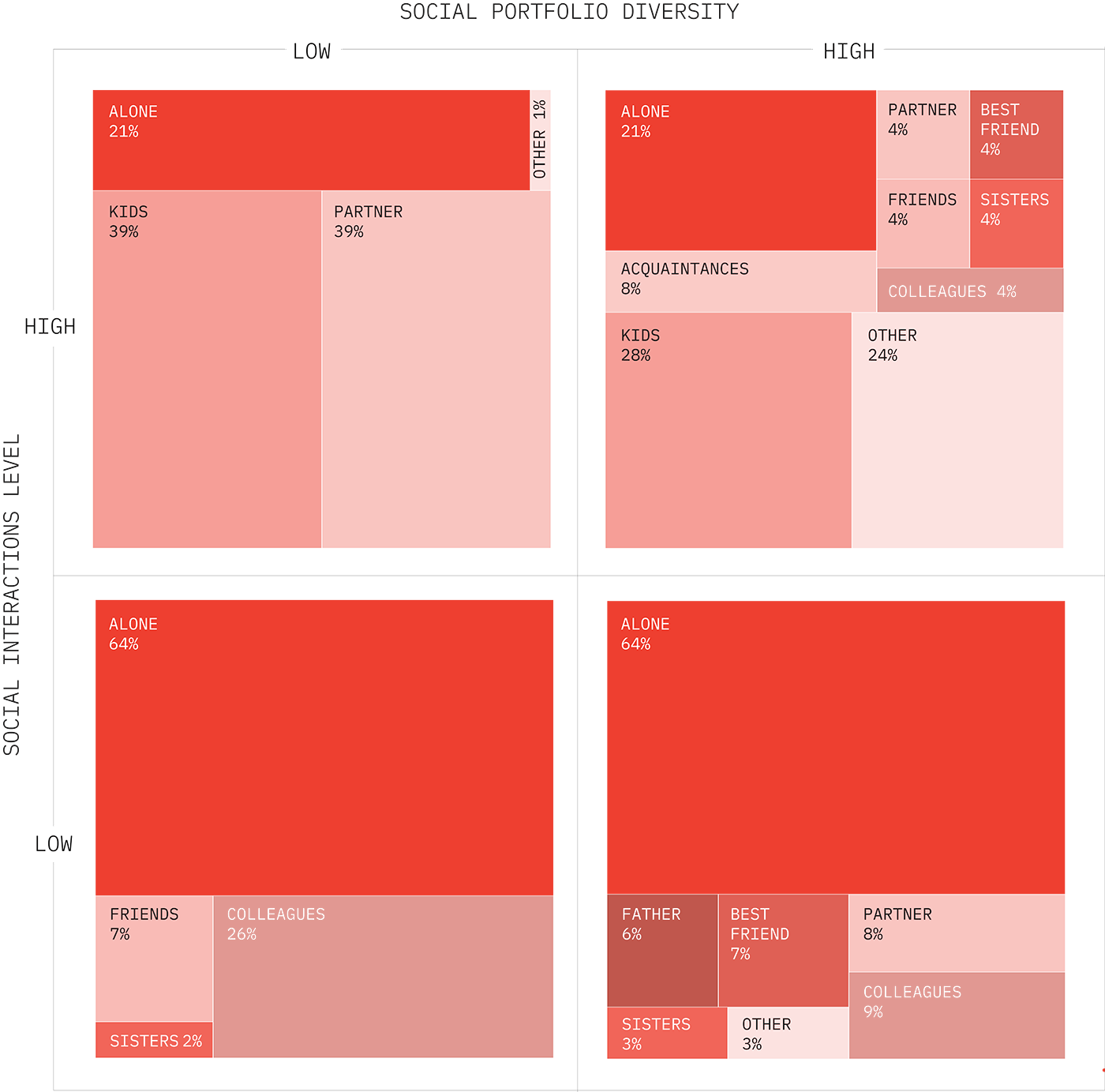
The time that requires a message sent to a group, a few back and forths, a decision, a small commitment to showing up. I usually dread the preparation, to the point where I’m often close to pulling away entirely. And then it happens, and it carries a weight that none of the easier alternatives ever quite reach. That distinction is easy to feel, but harder to see. This is where the data becomes interesting.
What this kind of distribution shows is not just how much time people spend with others, but how that time reorganises itself as social interaction increases. When interaction is low, time is concentrated. A large portion is spent alone, with a smaller number of repeated social connections.
As interaction increases, something shifts. Time fragments and spreads across different types of relationships: friends, colleagues, acquaintances, family. The structure becomes more complex, more distributed.
But here’s the important part. That expansion does not automatically produce meaning. It simply creates more opportunities for it. Which means the value is not in the quantity of interaction, but in the moments that people decide are worth coordinating, protecting, and remembering.
You don’t really notice this change by looking at technology. If anything, focusing on technology tends to obscure it. You notice it in the small amount of friction people are suddenly willing to accept in order to spend time together.
Along the stretch between Vauxhall and Battersea, this is starting to take shape quite clearly. Spaces are emerging that are not built around passive consumption, but around shared activity that only works if people engage with each other.
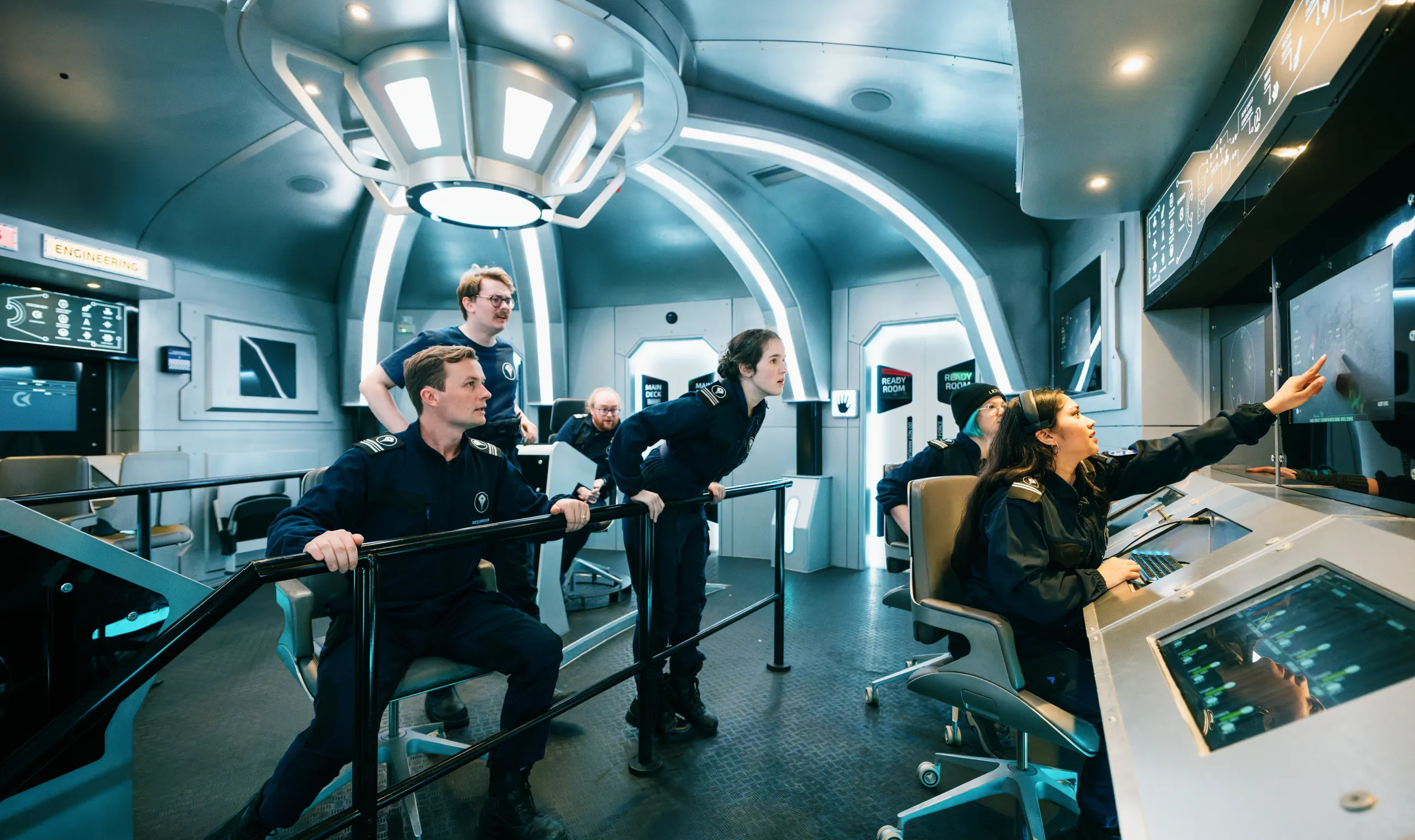
Bridge Command and Activate London are two good examples, but they approach the problem from very different angles. At Bridge Command people are inside a simulated starship, each with a different role: navigation, engineering, communications, command.
The system only functions if those roles connect, nothing progresses unless decisions are made together. Information is incomplete by design and progress depends on coordination rather than individual performance. What you see is not people consuming an experience, but people negotiating with each other in real time. Small disagreements, quick alignments, moments of hesitation followed by action. The experience is almost secondary to the interaction it forces.
Activate operates in a very different way. It’s physical, reactive, fast.
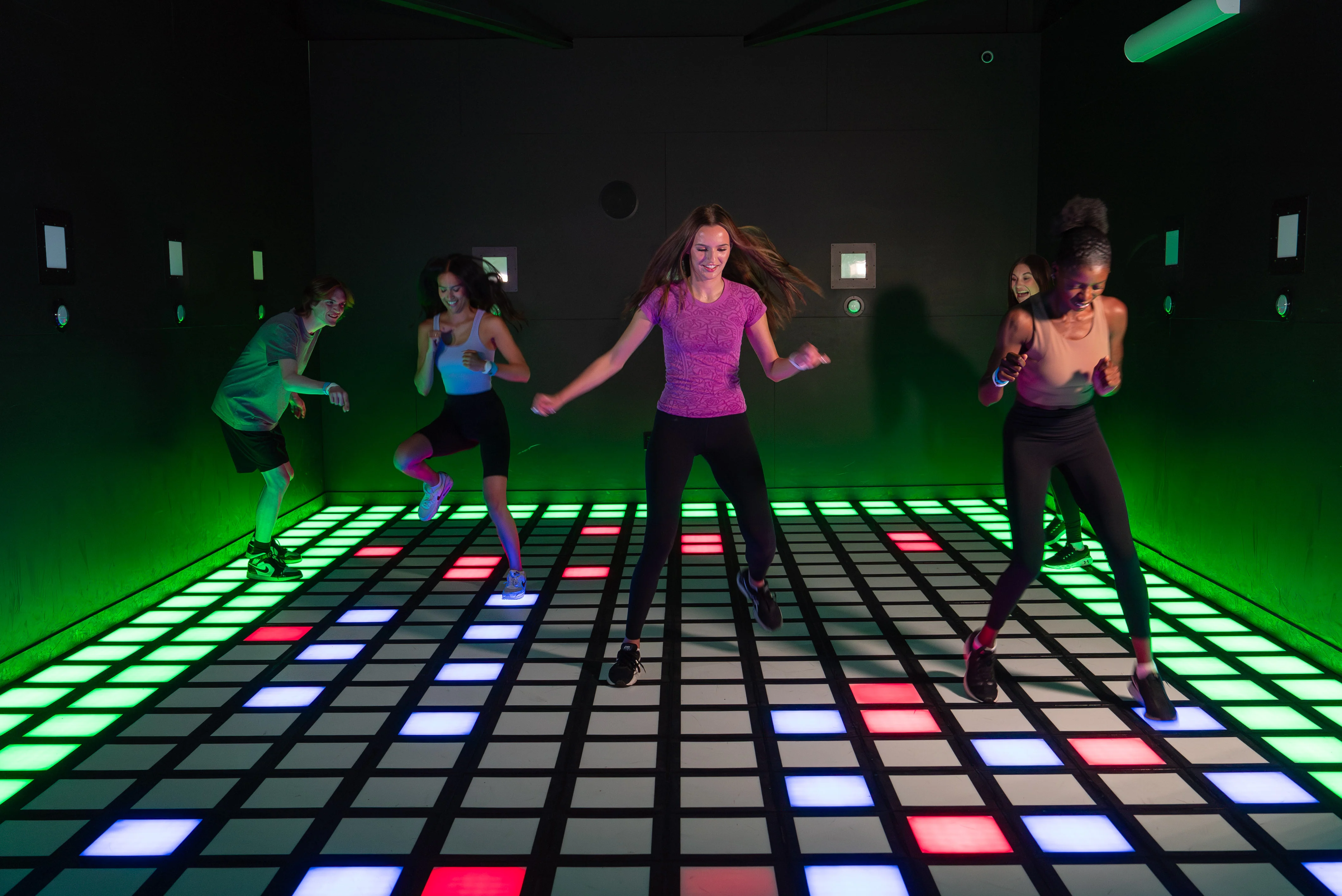
Activate at The O2 is "active gaming" which relies on physical movement to complete challenges.
Each room responds to movement, timing rhythm but the same pattern appears. People start individually, then quickly realise that nothing really works unless they sync. They adjust, fail, try again, laugh, compete, cooperate. The system responds, but what holds them there is the need to align with each other.
The formats are different, the pacing is different, the technology is different but what repeats is the behaviour: people stop acting in parallel and start acting together.
That same shift is now appearing at a much larger scale.
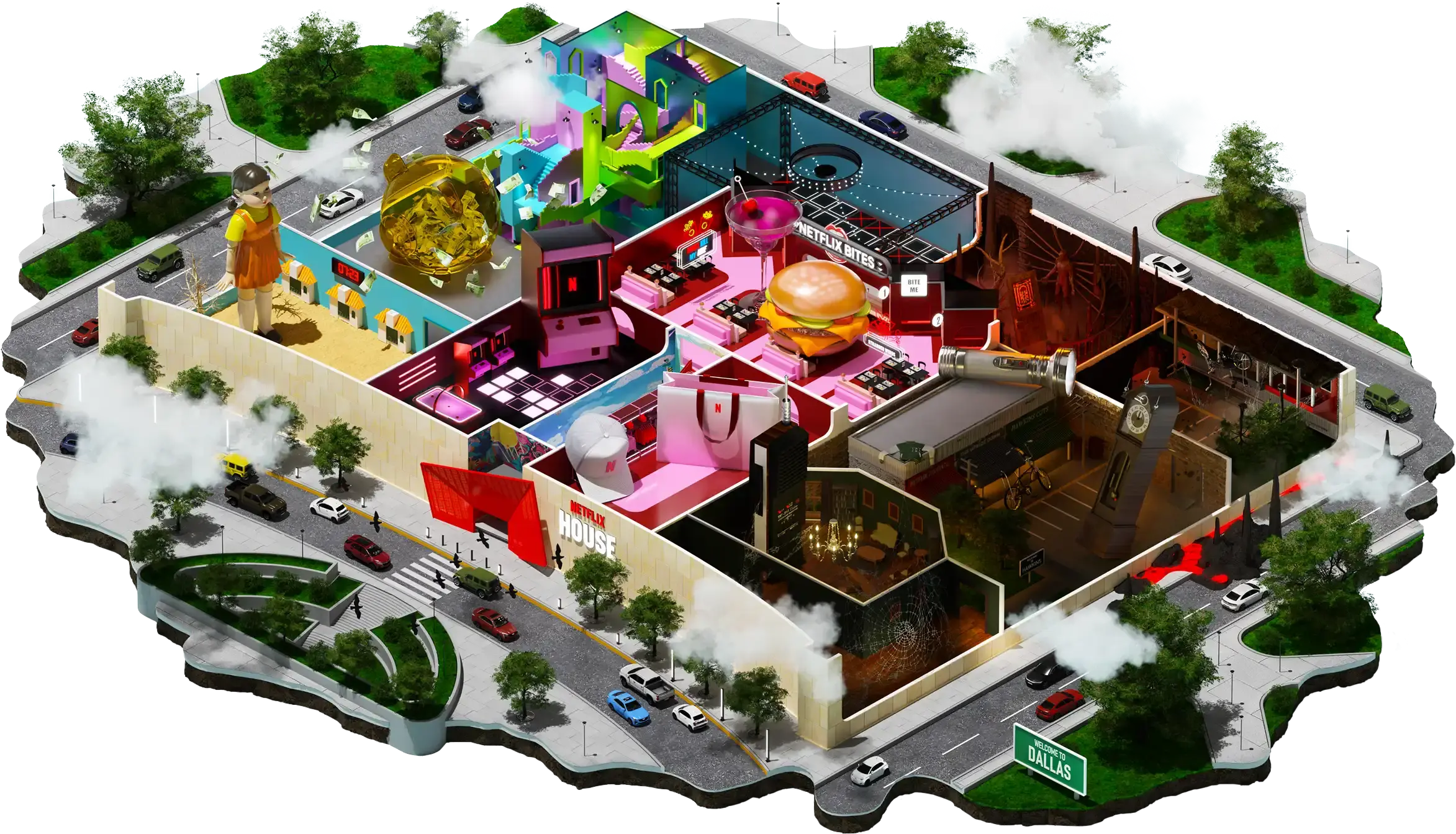
When Netflix House was announced, it was easy to interpret it as content expanding into space, another way to step inside familiar worlds. But what is interesting is not the translation of IP into physical environments, it is what people do once they are inside: they go together, move through it together, react in real time instead of separately, on separate screens, at different moments.
After years of optimising for individual consumption, these environments are reintroducing something slightly inconvenient: coordination. Not in a heavy or forced way, but enough that you can’t fully experience them alone. You need someone else there, even just to look at them when something happens. That small requirement changes the nature of the experience more than the technology does.
It creates a reason to choose the harder option, to align schedules, show up, and commit a block of time that can’t be easily interrupted or replaced. And once that effort has been made, the experience carries a different weight: because it was shared.
This is where a lot of brand thinking still falls short.
Even when we talk about community, most of what gets built is still designed for individuals. Experiences you go through on your own with moments that are expected to be shared afterwards, usually online, sometimes optimistically. They look social but structurally, they allow people to remain independent.
And that distinction matters more than it seems.
Because shared time requires some level of mutual awareness, some dependency, however small, on what others are doing. Without that, the experience remains parallel. And parallel experiences, no matter how polished, rarely stay with people for long.
If you take this seriously, the design challenge shifts in a way that is slightly uncomfortable. It’s no longer enough to create something people will notice, or even something they will enjoy. The question becomes whether it gives people a reason to show up together, and something to do once they are there that cannot easily fragment into individual tracks.
That is harder than it sounds.
It requires giving up a certain level of control, accepting that part of the experience will happen between people rather than in front of them. But when that balance is right, something shifts: the experience stops behaving like content and becomes a place people return to.
There is a simple way to sense the difference, and it has very little to do with technology. Would anyone message a group, go through the small friction of finding a time, agreeing on a place, and making the effort to show up together? If the answer is no, the experience may still perform well, attract attention, generate content, even create short term engagement. But it will remain interchangeable.
If the answer is yes, the experience becomes part of how people spend time with each other. It comes up in conversation, it gets revisited, it becomes something that is suggested rather than just encountered.
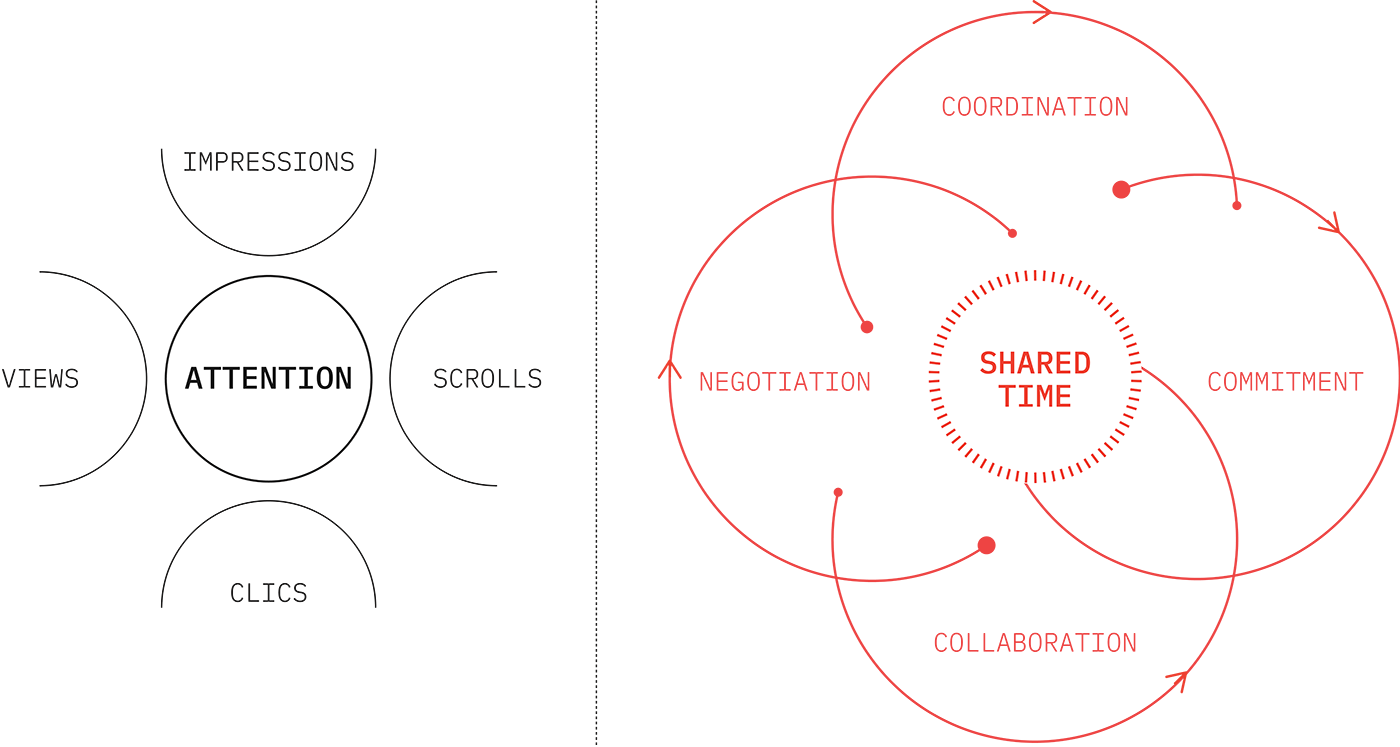
We have spent the last decade learning how to capture attention. It became a system. It was measurable, optimisable, endlessly scalable, and for a while it felt like enough.
But attention passes quickly, leaves very little behind, and rarely asks for anything in return. Time behaves differently.
Shared time, especially, is negotiated. It requires messages, alignment, small compromises, the quiet decision that this is worth showing up for. And that decision carries weight, because it excludes everything else that could have filled that space.
Which is why this shift matters more than it first appears. We are moving, slowly, from a landscape where success is defined by how many people notice something, to one where it is defined by how many people choose to be somewhere together.
That is a much higher bar. Because you are no longer competing with content, you are competing with plans, inertia, the ease of staying home. Mine, for example. Remember for me and others, it is a chore to go out. And yet, when something clears that bar, it behaves very differently. People organize around it and bring others into it.
They return not because it was immersive, not because it was innovative, but because, at some point, it held a moment that was worth sharing, and worth repeating. And that is a different kind of value entirely.