Client: PortAventura World
“The collaboration with Brave Duck and Robots, grounded in innovation and a shared drive for unforgettable experiences, has truly shown what we can achieve together.”
The central question that emerged in early conversations with the CDO was central: How can we increase capacity, engagement, and value per guest without relying on new land or multi-year construction projects?
Instead, we analyzed it as a system of behavior. We mapped:
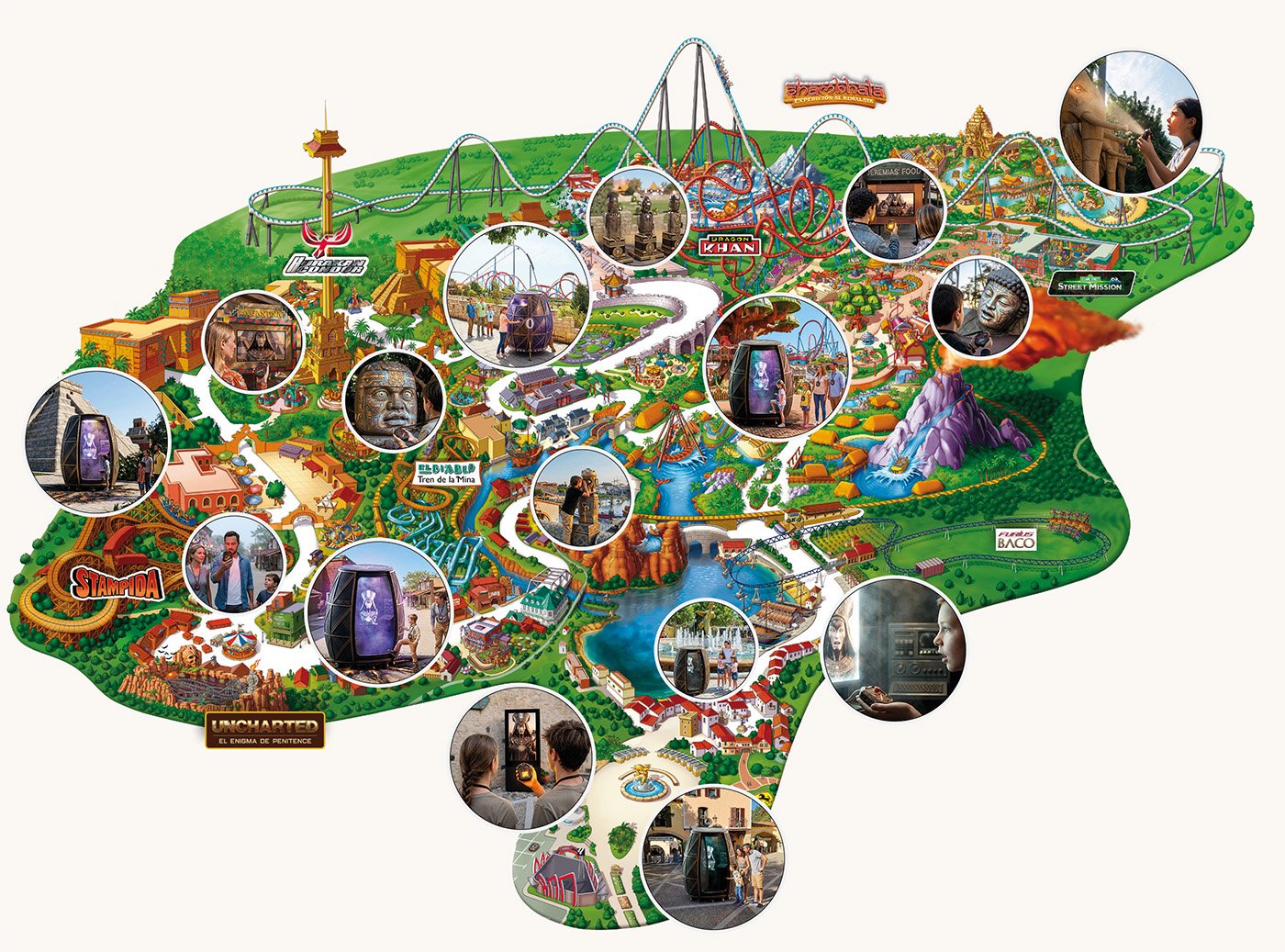
The main constraint of the park was how experiences were sequenced, distributed, and activated.
At the same time, guest behavior had already evolved:
If experience could be layered across the park instead of being fixed to individual attractions, then flow, engagement, and capacity could be shaped dynamically.
We developed an additional experiential layer designed to operate across all existing physical worlds, adapt in real time, and connect movement to narrative and reward systems.
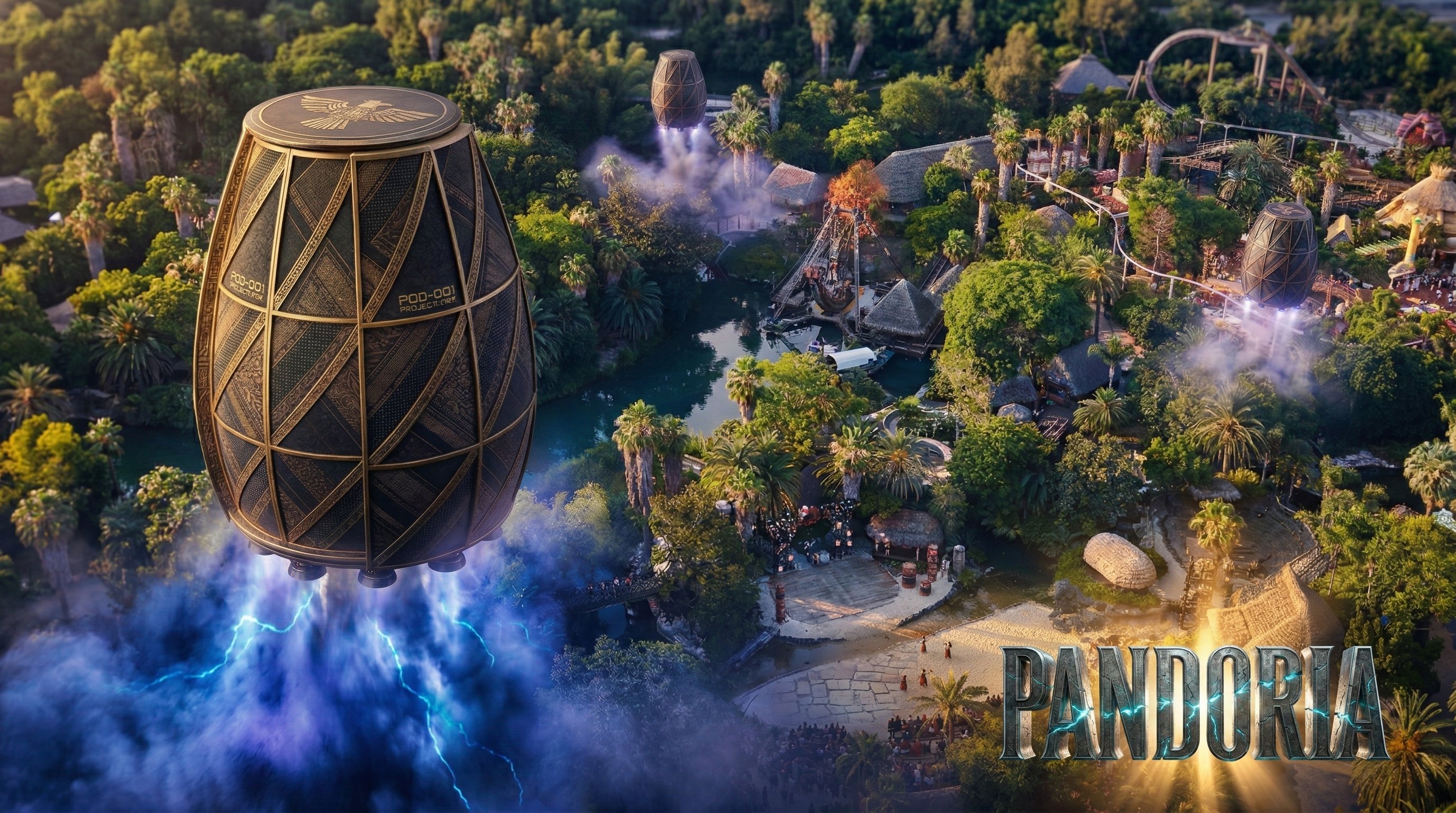
We called this new world Pandoria, the park’s eighth world, designed to operate across the entire park footprint and grow over time.
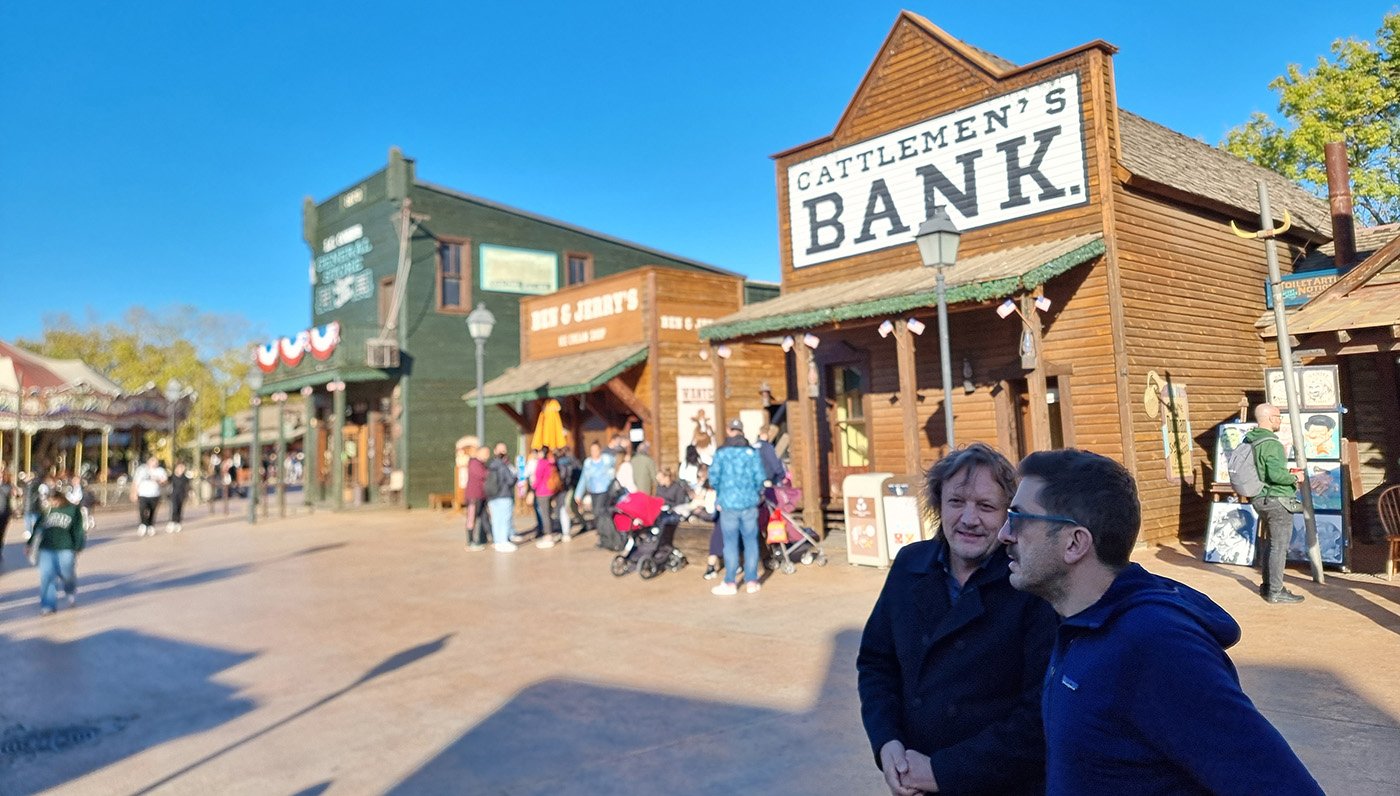
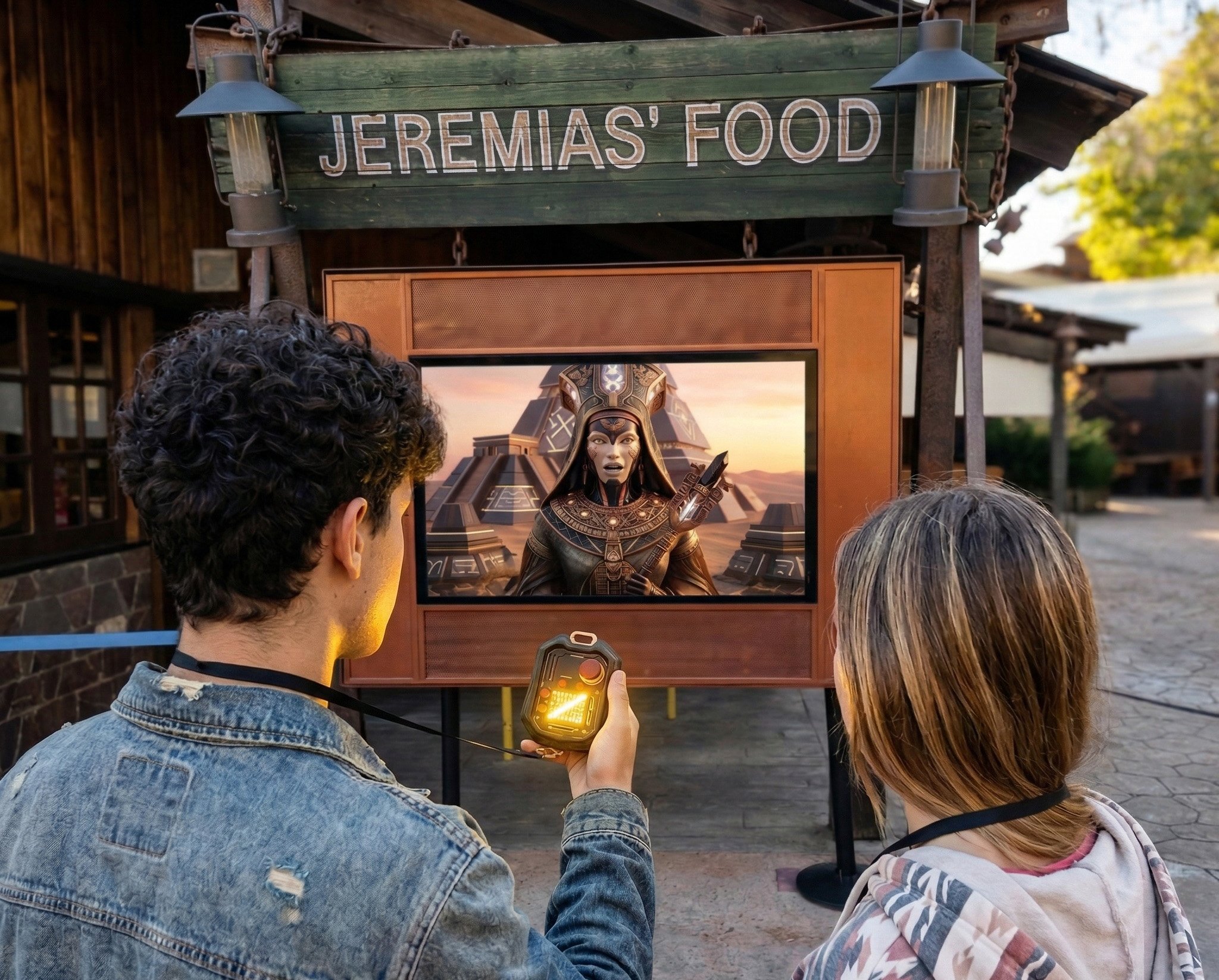
Instead of entering a separate area, guests activate Pandoria inside the park. The world appears around them through physical and digital touch-points. Access is enabled through fixed interaction points (“portals”), a wearable access device (“the Amulet”), location-based quests tied to real attractions and spaces.
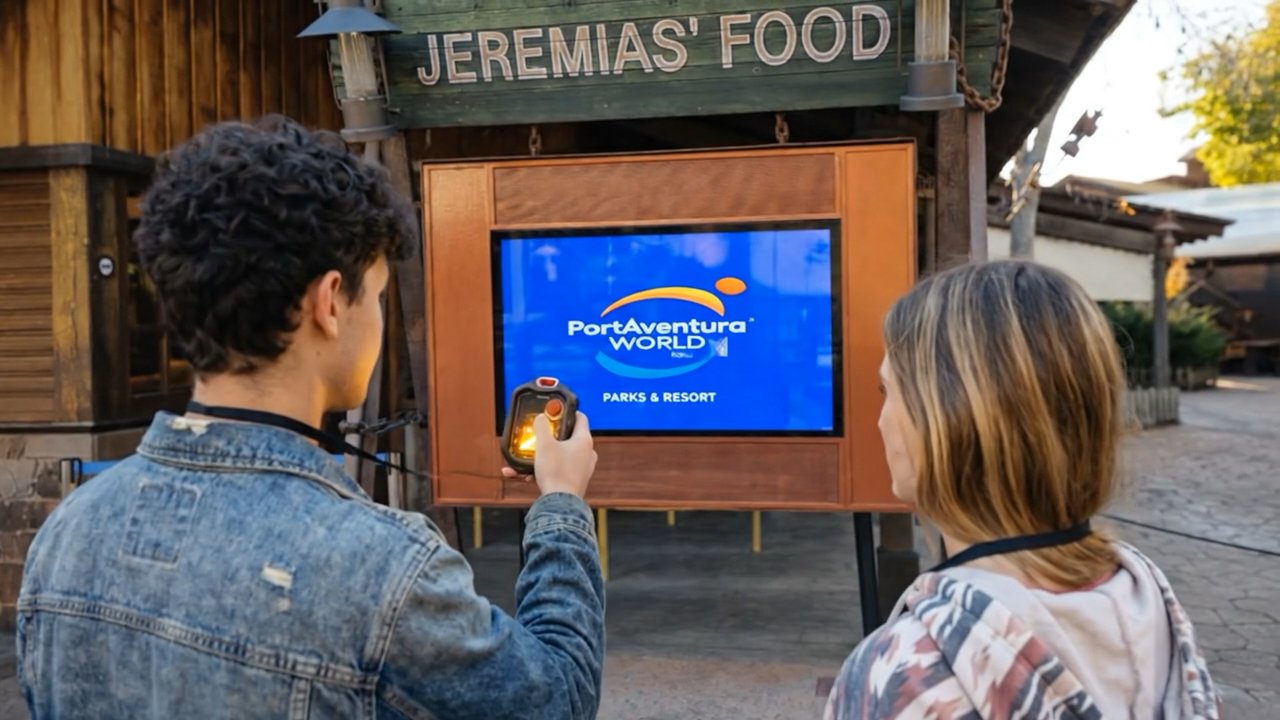
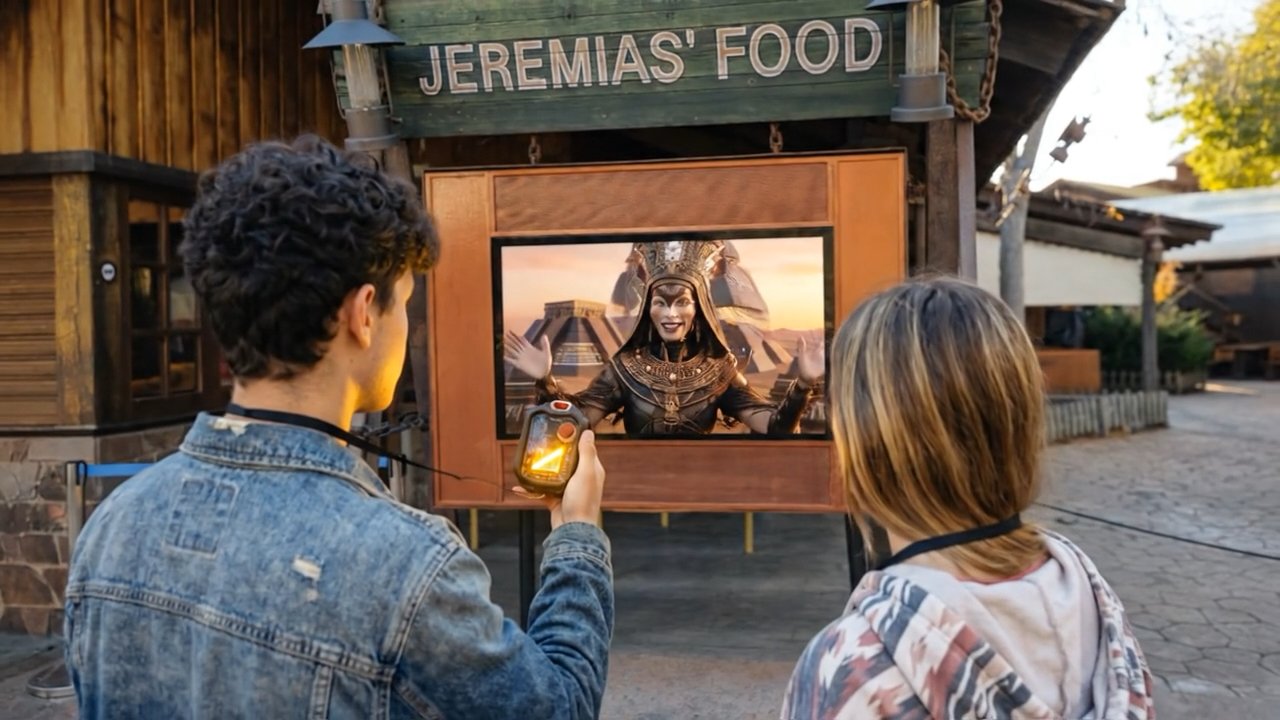
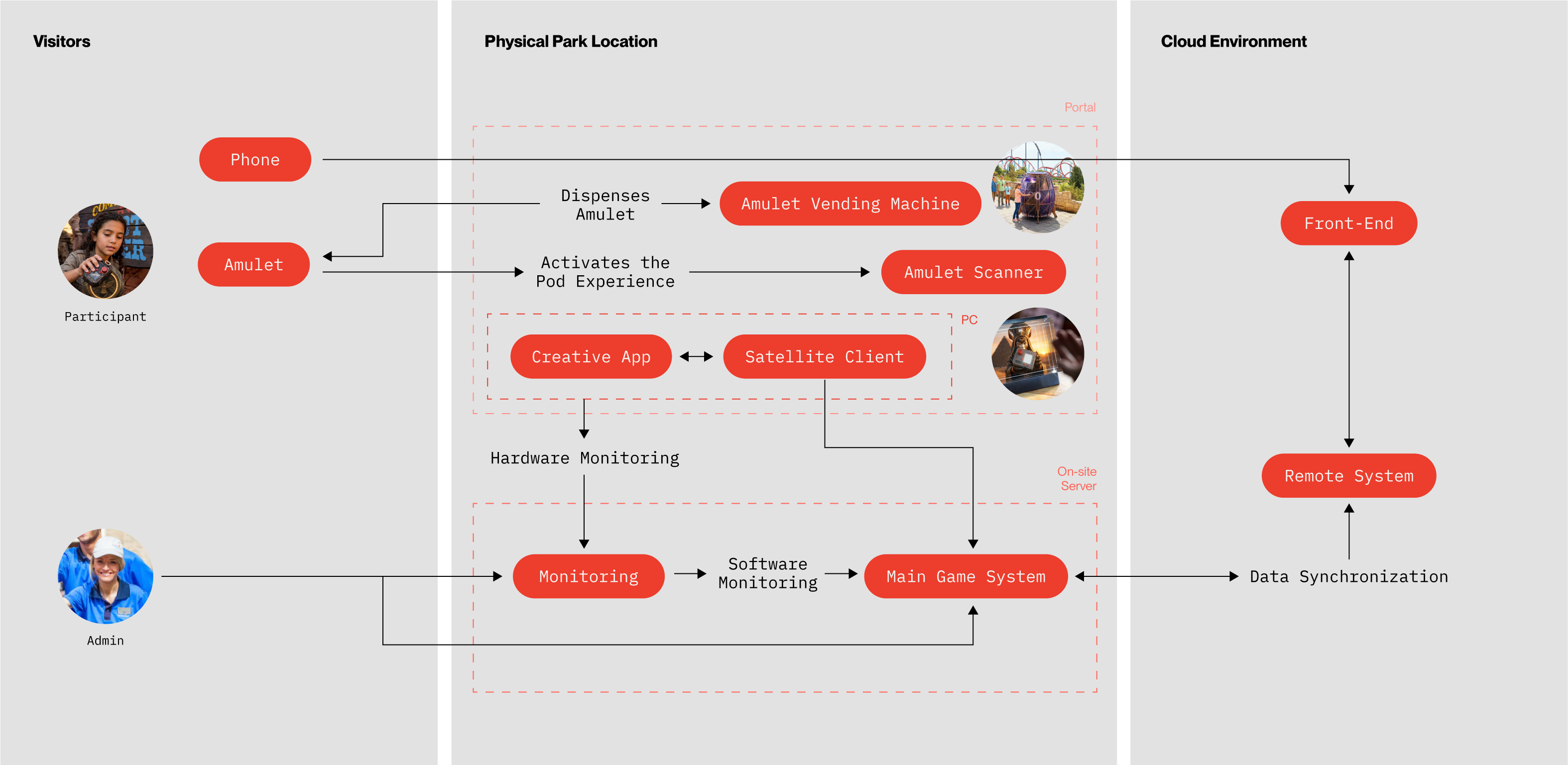
We designed the experience to be mostly independent from the visitor's smartphone, leveraging instead a physical map, a book for insights and clues and the amulet device serving participants as both a navigational and interactive tool. Admins would have a clear overview of the participant's location, progression, and general behaviour thoughout the experience.
This live data would continiously be analised and evaluated by our AI, enebabling the narrative and quests to be generated in response to their behaviour and to guide participants to areas of interest.
Onboarding happens through discovery rather than mandatory downloads or registrations. Guests find portals organically and are invited into the experience through narrative prompts and character-led interactions.
The objective is simple: reduce barriers to entry while maximizing initial engagement.
Quests are designed to turn exploration into progression. Guests move through the park to complete story objectives, unlock content, and advance within the narrative structure.
This transforms navigation into gameplay and distributes activity across the park in a way that feels purposeful rather than operational.
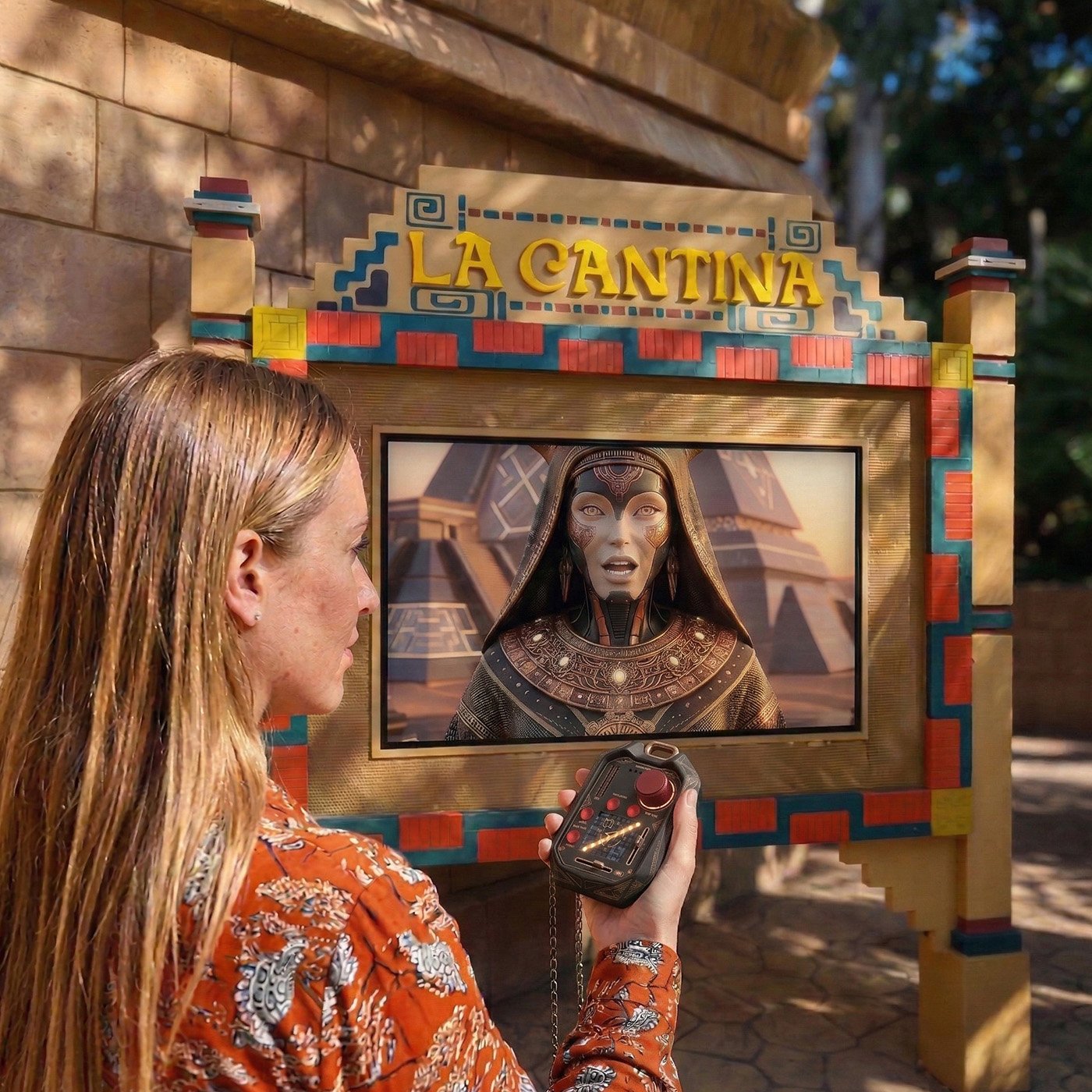
Rewards are designed around time (queue priority, fast access), access (exclusive areas, limited experiences), and status (recognition moments, participation in events).
This converts engagement into tangible outcomes and reinforces behavior patterns that support both guest satisfaction and operational goals.
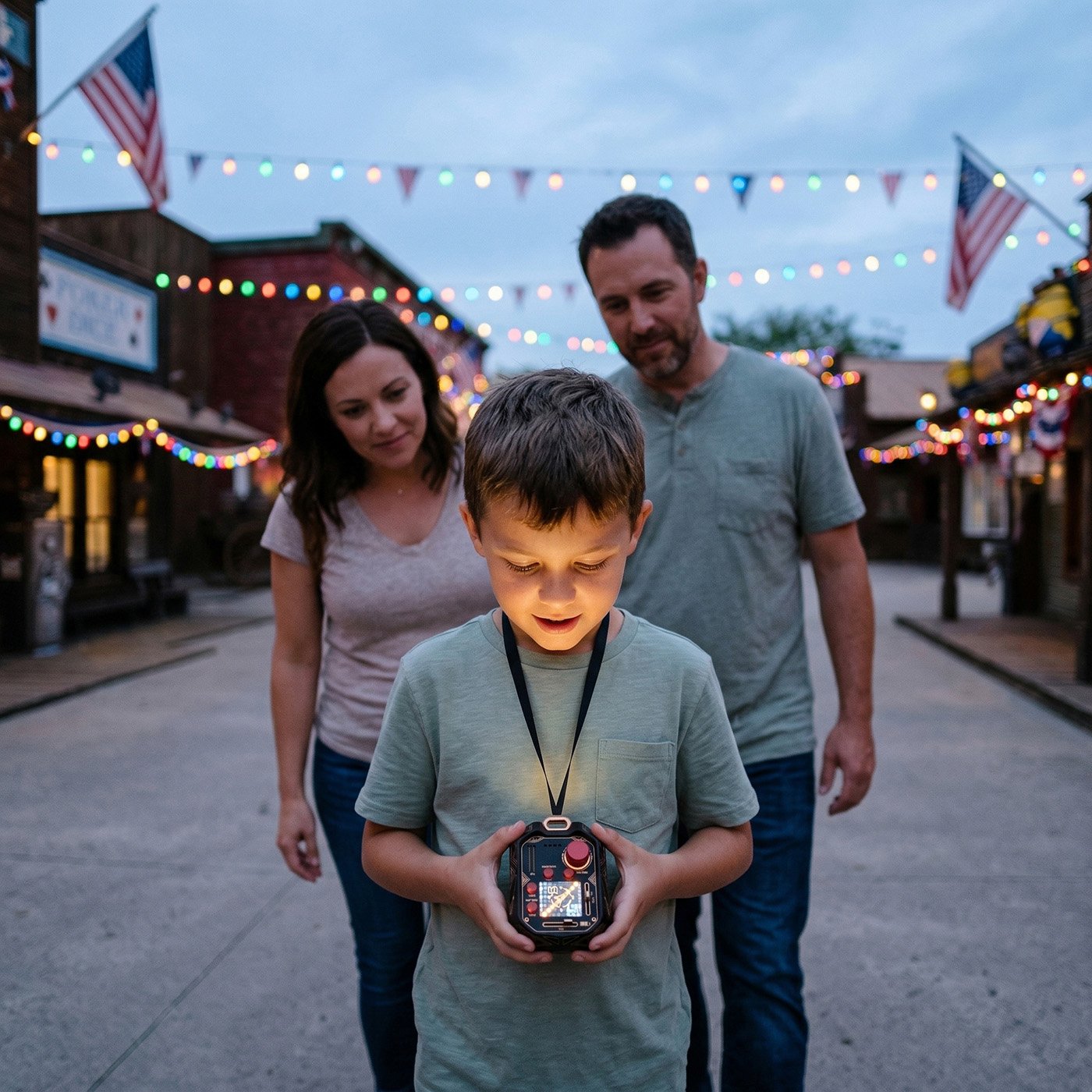
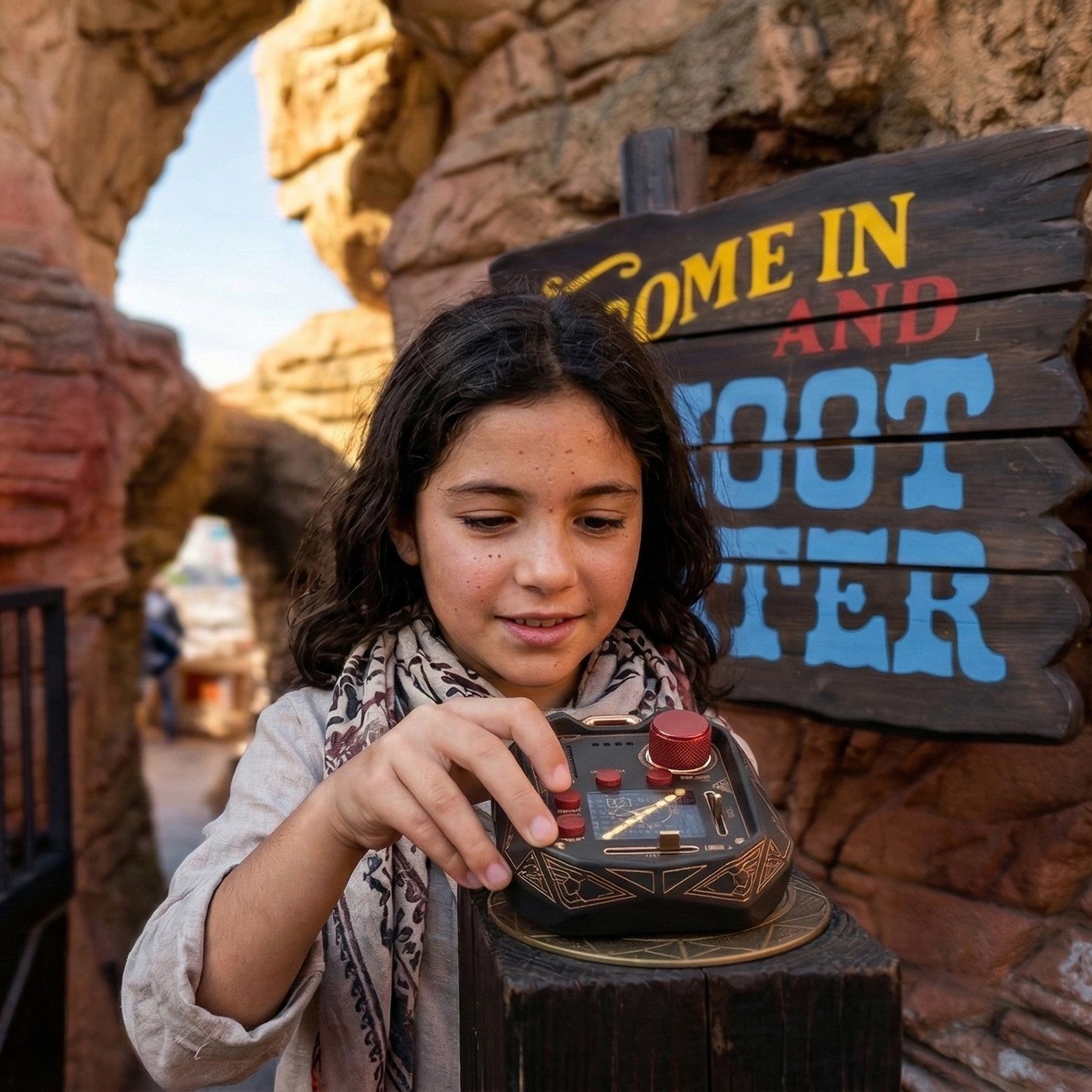
The Amulet is a wearable interaction device that acts as the interface between guests and the experience layer. It functions as a unique identity token, a quest activation key, a reward credential.
When guests approach a portal or story checkpoint, the Amulet authenticates automatically and triggers contextual content. Progress is recorded in real time and rewards are issued instantly.
The design choice to use a physical device was intentional. Physical tokens increase perceived value, reduce friction compared to phone-based interactions, and create stronger behavioral engagement.
This allows experience design and park operations to operate on the same data layer.
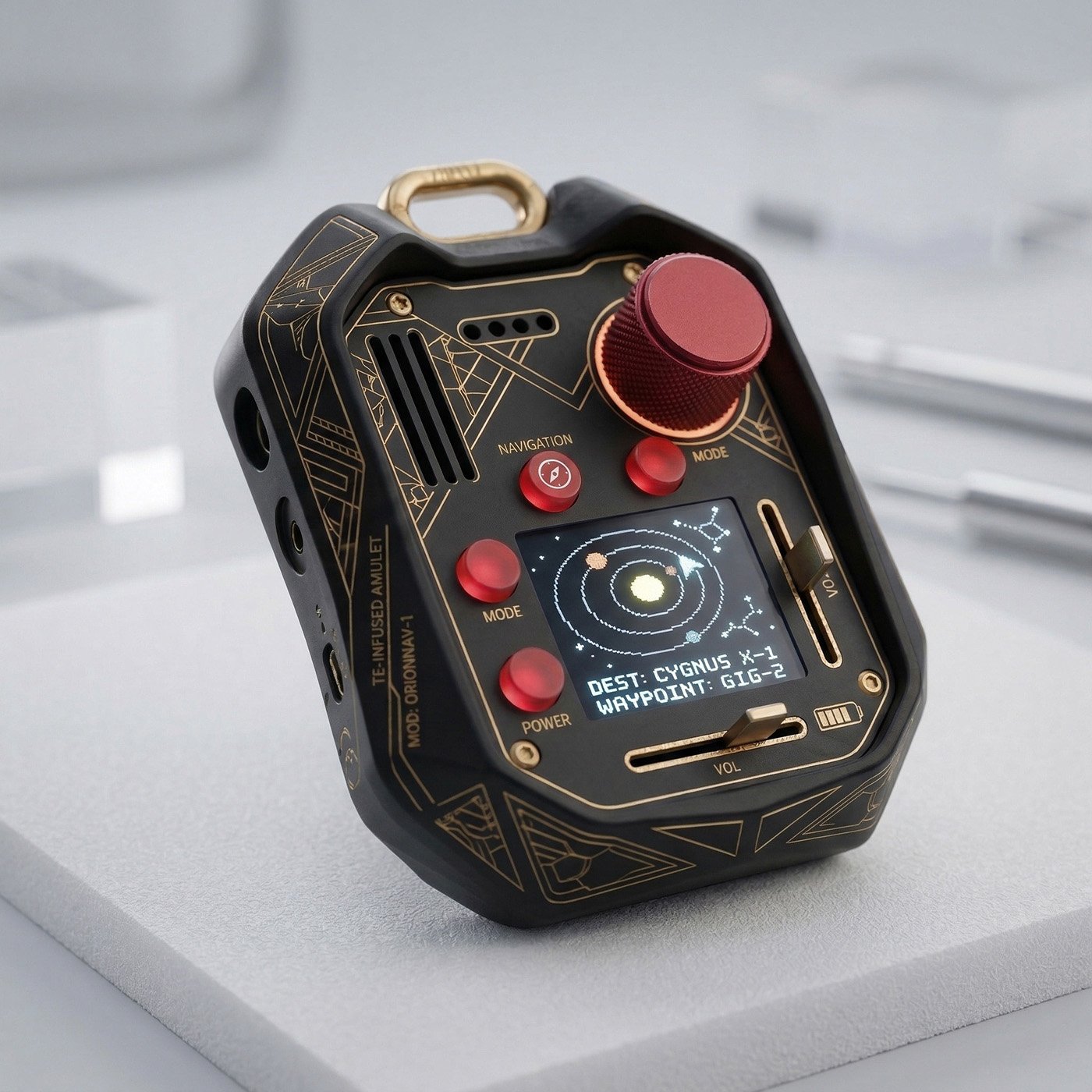
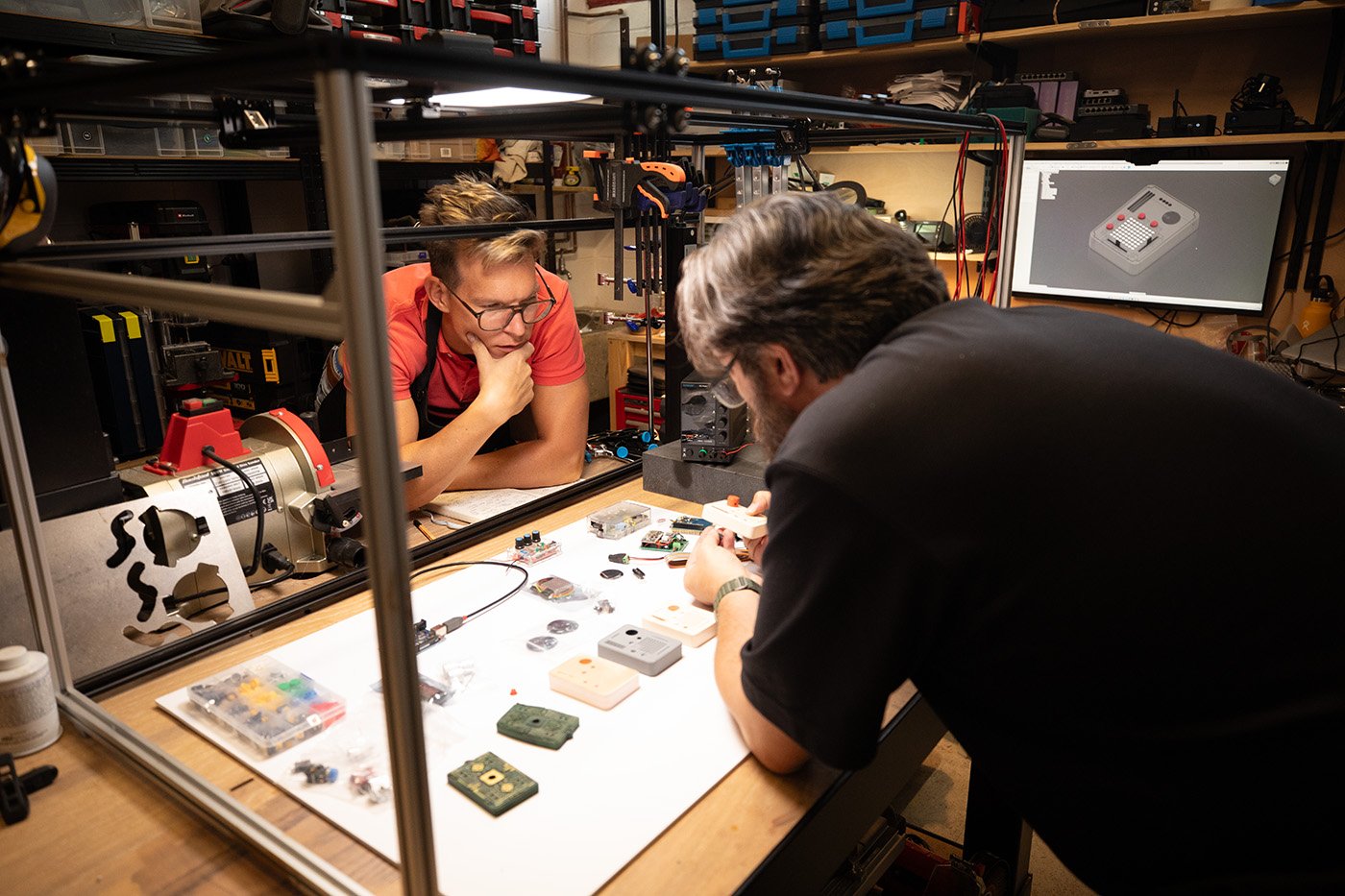
We designed the interior features of the device so that it would be flexible enough to fit a wide range of themed exterior cases, which would be decided on when a specific narrative-driven theme was chosen by the client.
We see The Amulet not just as a device that unlocks stories and experiences through contactless, but also as a physical key and controller. Sometimes - when required - the device will have to be used as a physical key to decipher, unlock, control and manipulate physical story elements at different locations.
The amulet triggers navigational content based on visitor behaviour on the exciting digital infrastructure of the park.
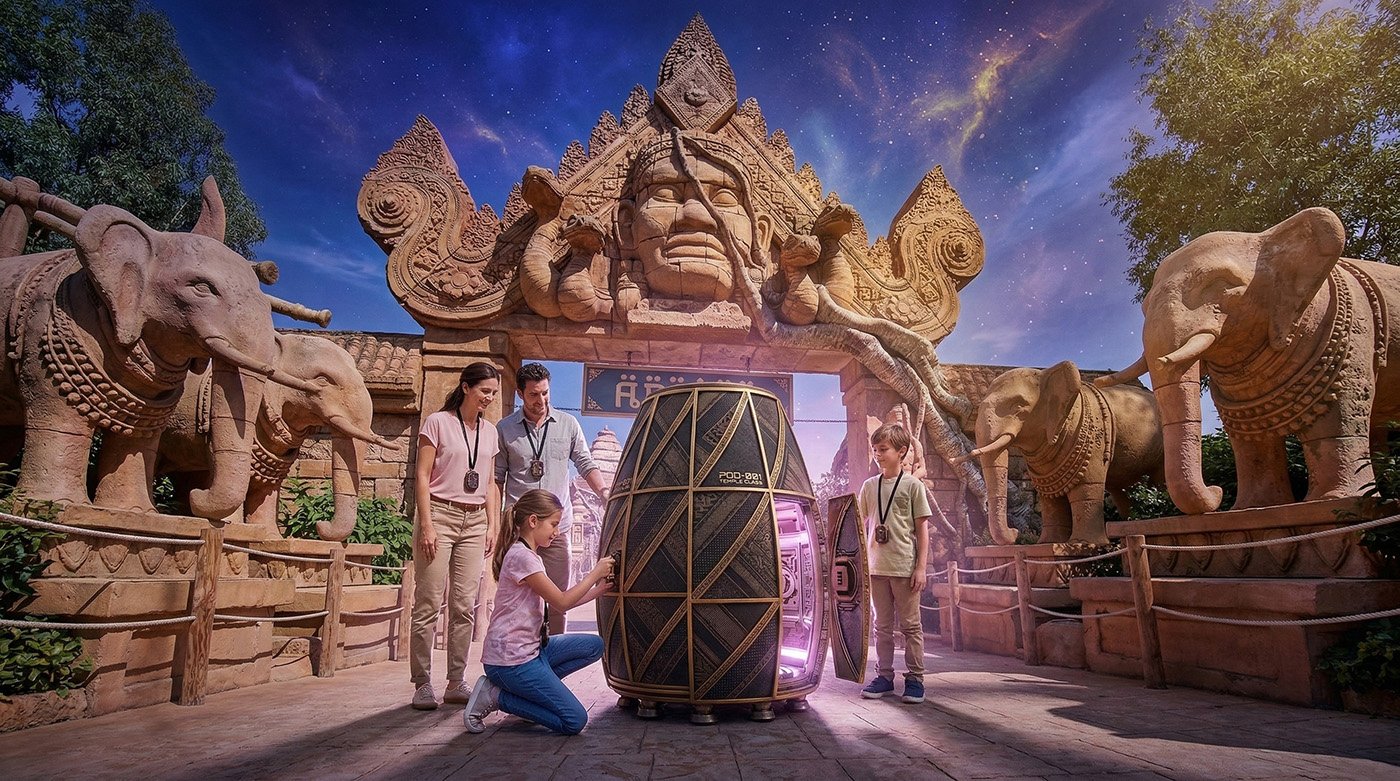
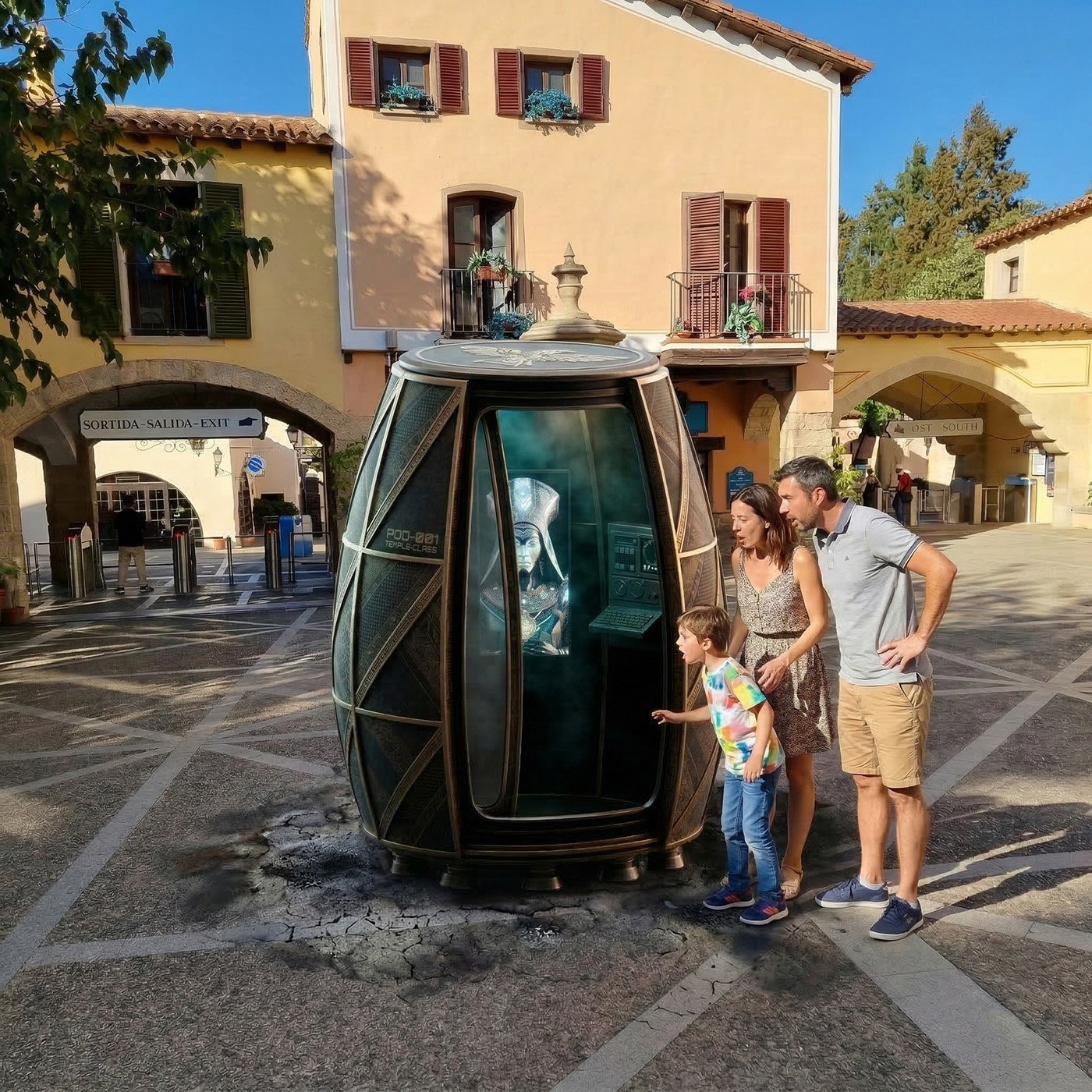
Our bespoke narrative explains to the participant that the Priestess has landed on earth with several other escape pods - of which each has landed in a different location - and serve as portal-like physical touch points to enter the world of Pandoria.
These pods have been designed to both onboard visitors into the ‘Pandoria’ experience by having them meet the Priestess for the first time, who then entrusts them with her amulet device to start their own adventurous journey. But also it serves as a non-linear touch point for story progress to anyone who has already started their own quest and has used their amulet as a key to open the door into the pod.
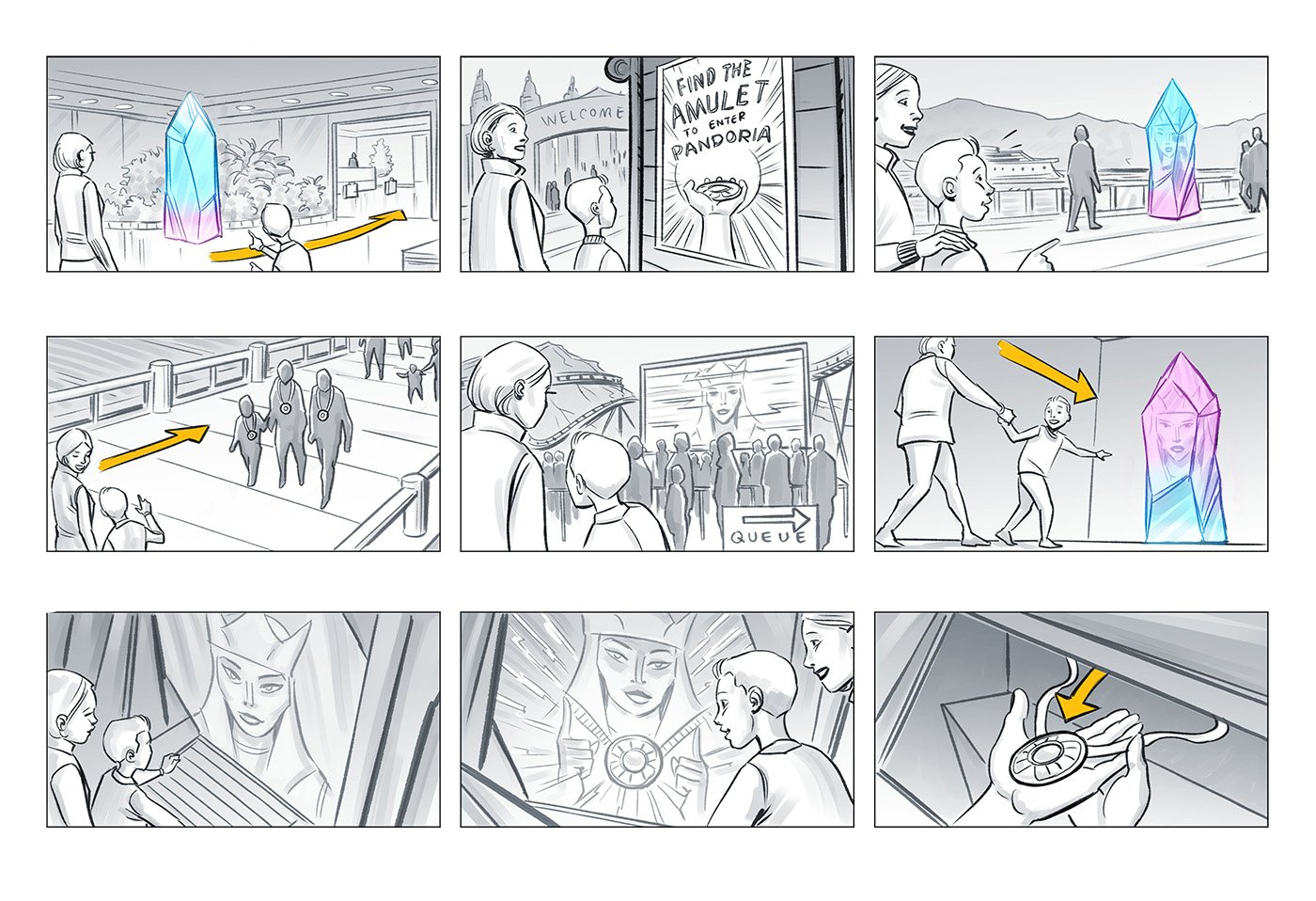
We have designed the experience surrounding the Amulet as non-linear. This means that guests can onboard from anywhere at any time within their visitor journey.
The pods and micro installations inside the different merch shops spread across the park work also as 'Onboarding Experiences' where the guest is chosen by our story character to join her on this adventurous quest across the lands. The pods have amulet dispenser mechanisms inside, providing a continious flow of device being given to new participants.
To promote the experience to new visitors we use the amulets on other participants as a statues symbol - worn on top of their clothing it becomes a prominent glowing feature - this, combine with seeing glimpses of the story character talking to participants via menu and queue screens and other digital touch points, will drive guest interest by evoking curiosity and the fear of missing out.
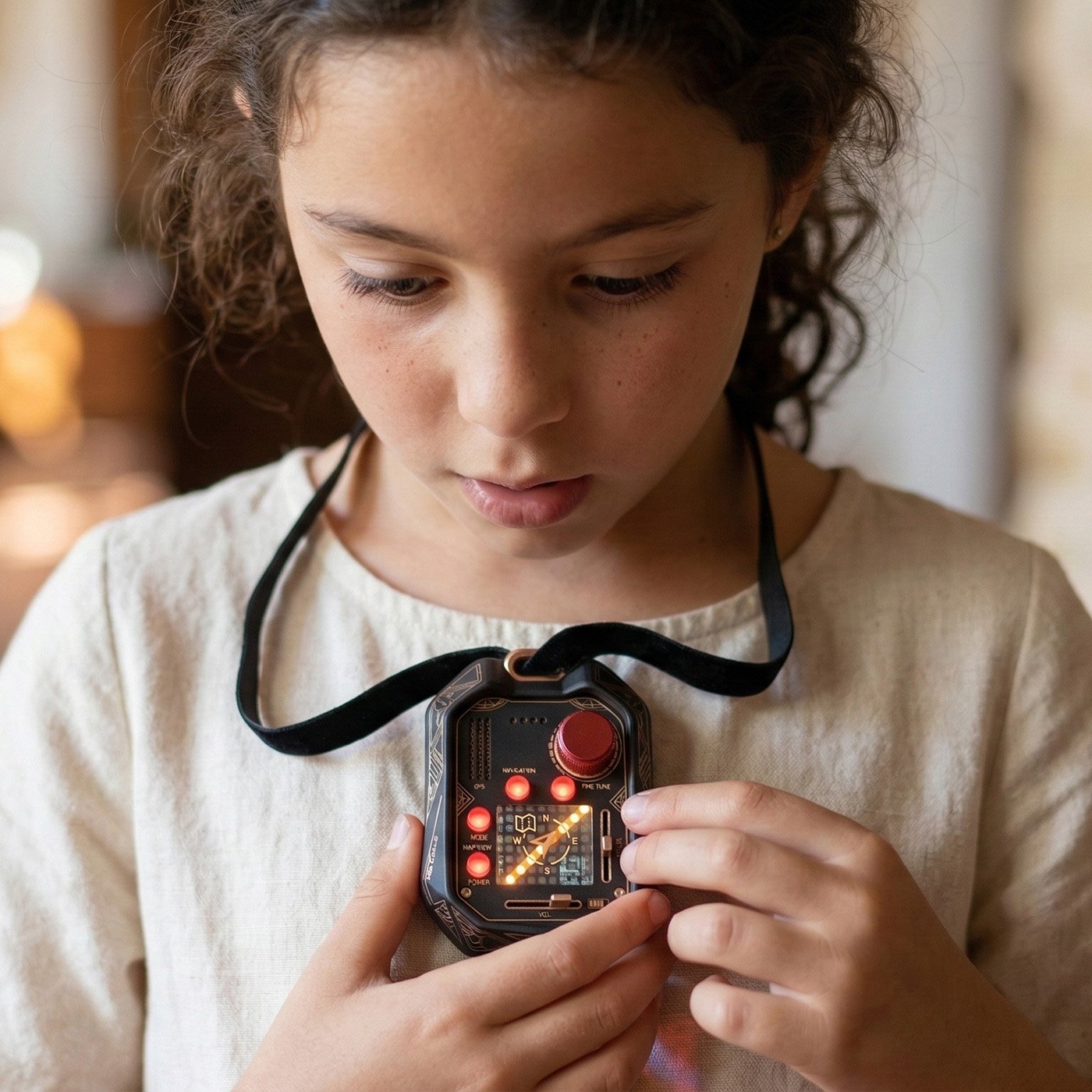
Amulet
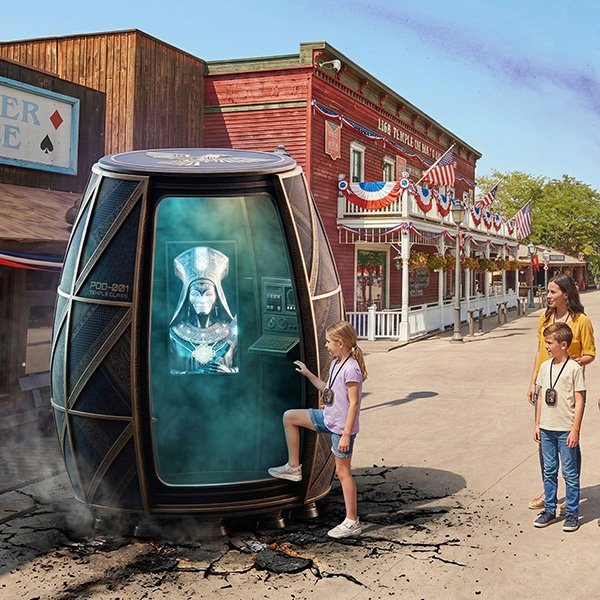
Pods
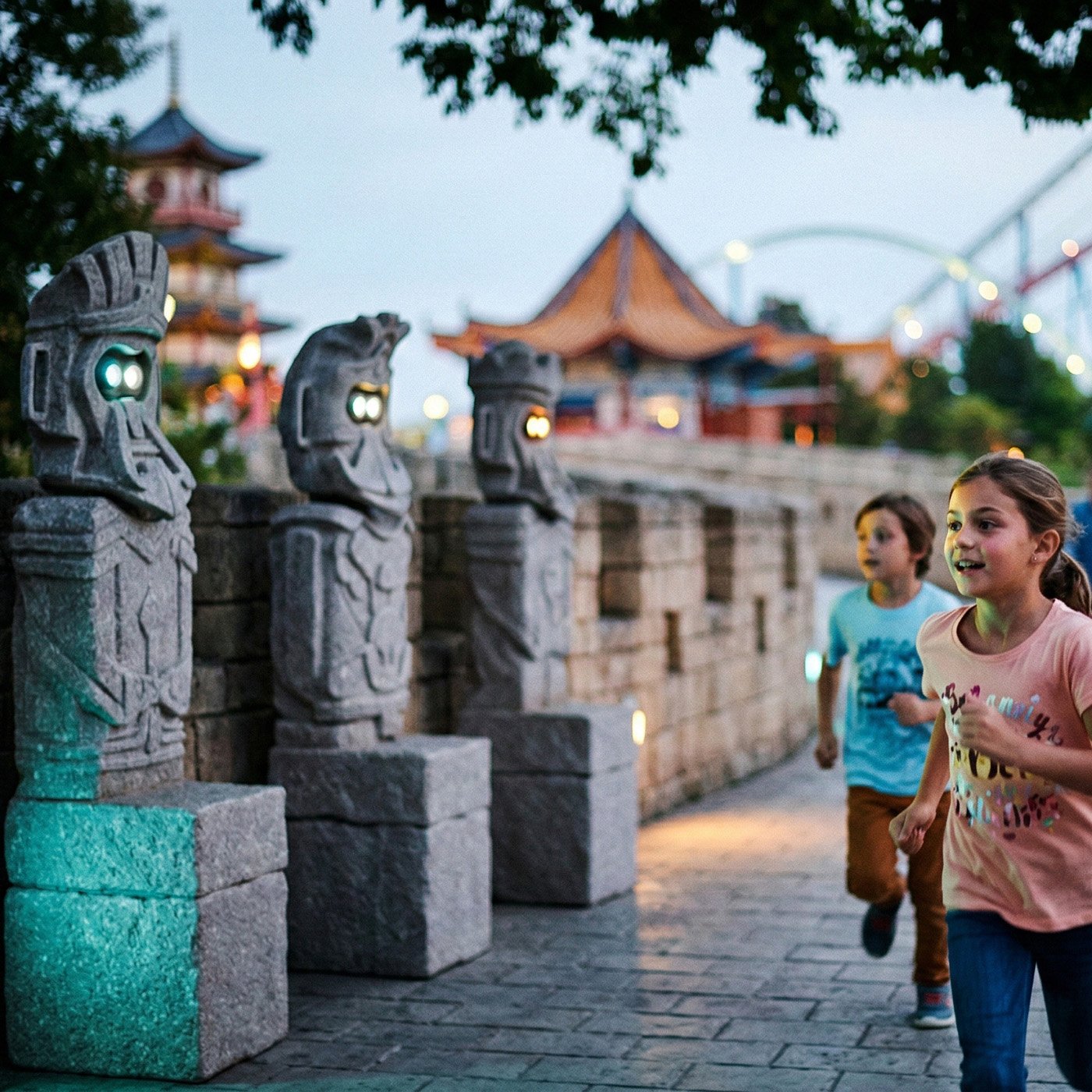
XR-Scopes
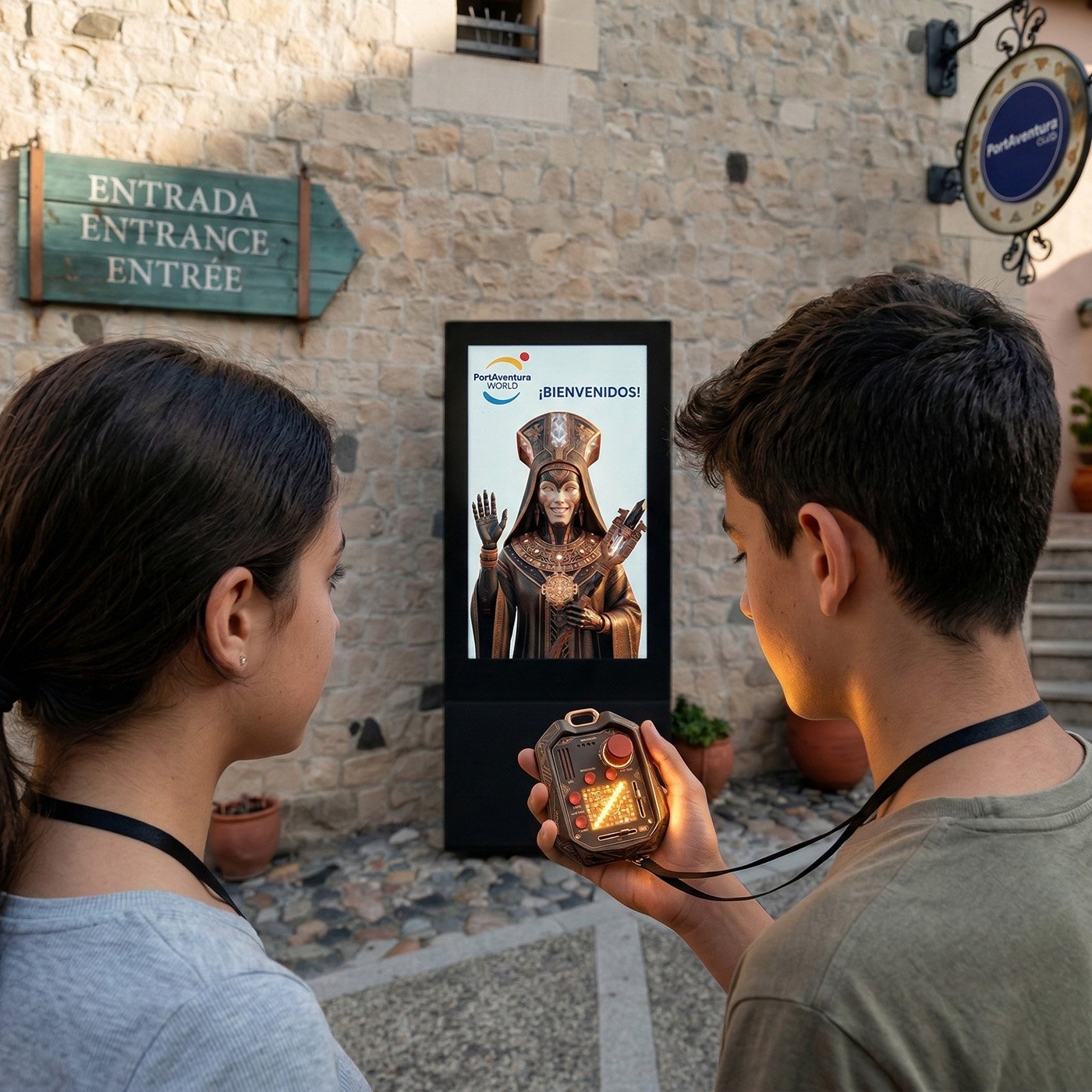
Hacking Screens
RFID Touchpoints
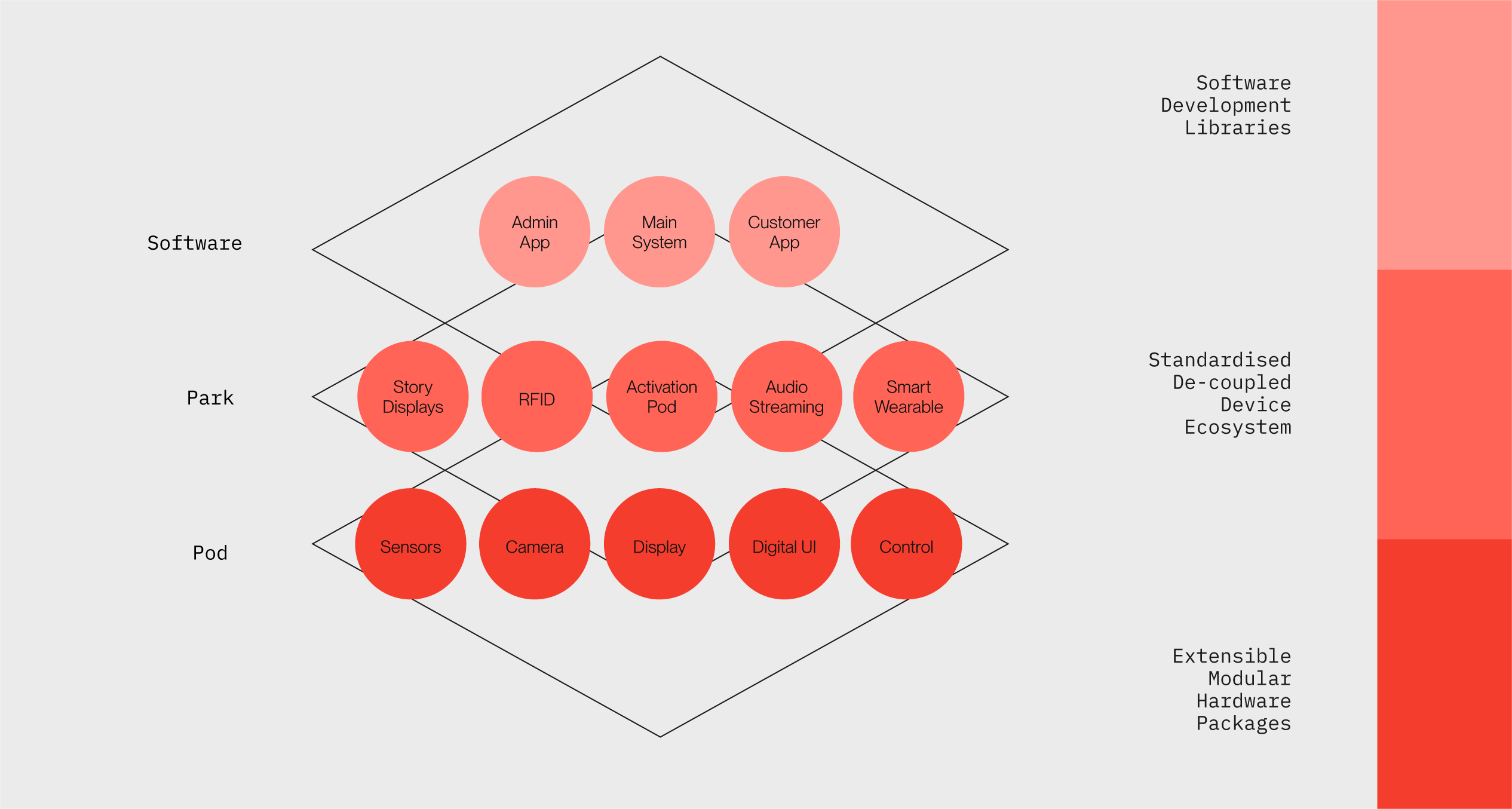
The generative story will come to life through a wide range of digital touch points - while at the core we have the amulet interacting directly with the existing digital infrastructure of the park - which means:
Touch points such as the Pods and the XR-scopes are more complex add-ons that give us more possibilities with immersing participants deeper into the world we have created.
The Pods could house books, maps and other physical clues that should not be carried around, but will make the 'Pandoria' world so much more real.
The XR-scopes allow us to augment the physical park at a large scale, we could have a spaceship fly by and dropping a supply crate, the guests can tag the drop location with the XR-scope and transfer that to their amulet, to then go out to find it. Lots of opportunities here to combine digital with physical in a way that feels real to the guests.
Pandoria was designed as a Minimum Viable World. The goal was not to launch a fully populated universe on day one. The goal was to validate the system under real operating conditions. The MVP scope focused on a single narrative arc, the operational dashboard, reward loop testing
Primary success metrics included engagement uptake, movement influence, behavioral response to rewards, and operational impact on congestion and dwell time.
This phased rollout reduces risk, protects capital investment, and creates a learning loop that informs future expansion.